What Is Chinese Lion Dance?
Chinese lion dance is a traditional performance in which performers imitate the movements of a lion using an elaborate costume. It is widely performed during festivals, celebrations, and important cultural events across China and around the world.
The lion is considered a symbol of power, wisdom, and good fortune. Through rhythmic movement, music, and coordinated teamwork, the lion dance brings energy and symbolic meaning to every performance.
History of Chinese Lion Dance
The origins of Chinese lion dance can be traced back over a thousand years. While lions are not native to China, the concept of the lion was introduced through cultural exchanges along ancient trade routes.
During the Tang Dynasty, lion dance performances became popular in imperial courts and gradually spread among the public. Over time, the dance evolved into a traditional cultural practice closely associated with celebrations and rituals.
Today, Chinese lion dance is recognized as an important part of intangible cultural heritage.
Types of Chinese Lion Dance
There are two main styles of Chinese lion dance: Northern Lion and Southern Lion.
Northern Lion
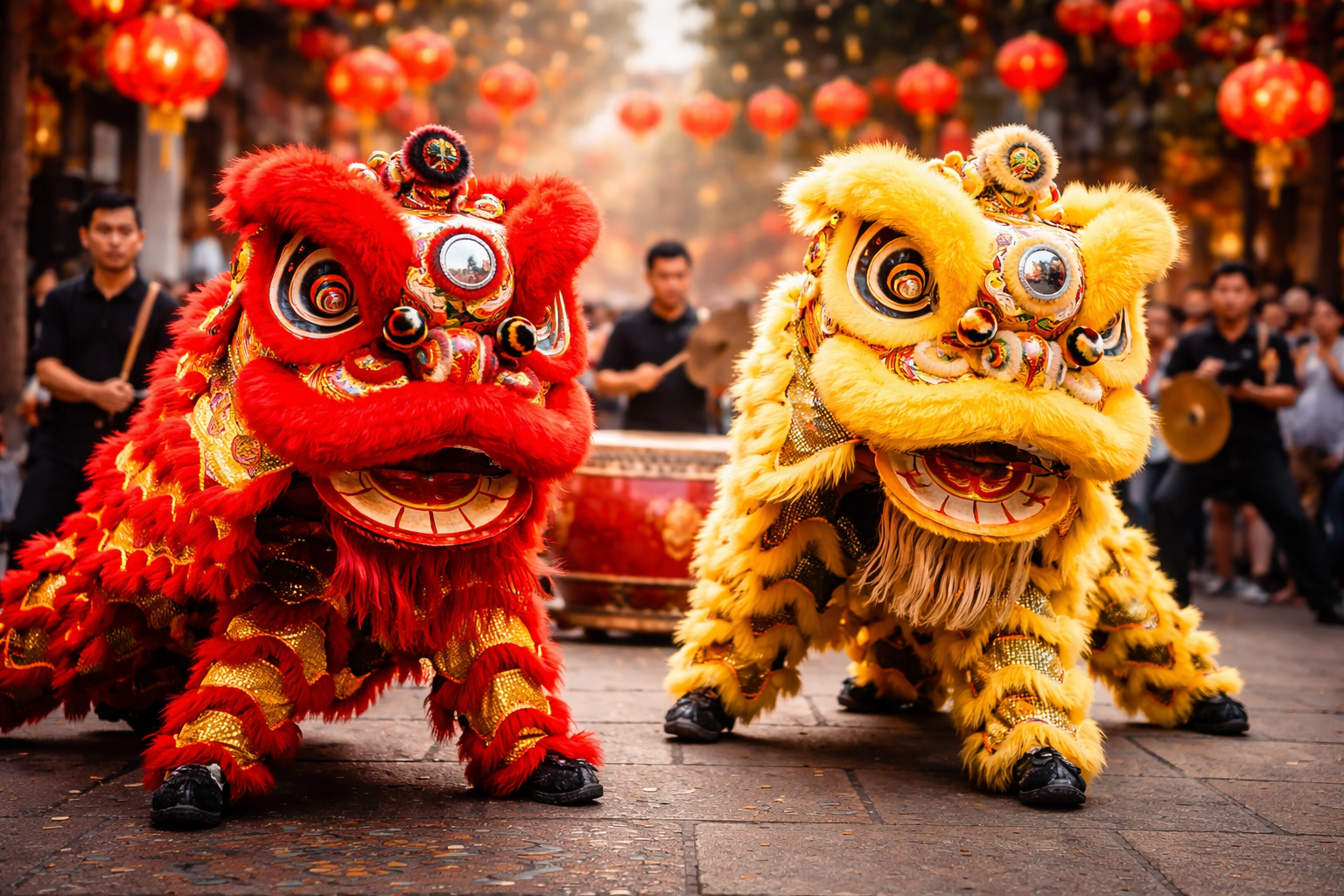
The Northern Lion resembles a real lion with a shaggy appearance. Performances often include acrobatics, jumping, and balancing acts. This style emphasizes physical skill and entertainment.
Southern Lion
The Southern Lion is more symbolic and expressive. It features bright colors, exaggerated facial expressions, and dramatic eye movements. Performances focus on storytelling, rhythm, and interaction with the audience.
Lion Dance Costumes and Design
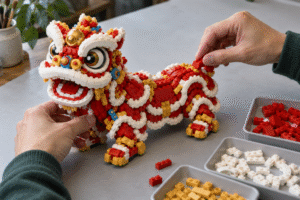
Lion dance costumes are carefully crafted using a combination of traditional materials and artistic techniques. Common materials include bamboo frames, paper, fabric, and hand-painted decorations.
The lion head is the most detailed part of the costume. It often features large eyes, expressive eyebrows, and vibrant colors. Each element carries symbolic meaning, representing emotions such as joy, curiosity, or bravery.
The body is typically made of layered fabric, allowing performers to move smoothly and create lifelike motions.
Cultural Meaning of Chinese Lion Dance
Chinese lion dance is deeply rooted in cultural symbolism. It is believed to bring good luck, prosperity, and protection from negative energy.
The dance is commonly performed during:
- Chinese New Year
- Business openings
- Weddings
- Cultural festivals
One of the most iconic rituals is “cai qing” (plucking the greens), where the lion interacts with symbolic offerings to bring blessings and fortune.
Modern Chinese Lion Dance Around the World
Today, Chinese lion dance is performed globally in countries with Chinese communities as well as international cultural events. It has also developed into a competitive performance art, with teams participating in lion dance competitions.
Modern performances may include:
- Elevated pole jumping (high pole lion dance)
- Choreographed routines
- Integration with stage lighting and music
Despite modernization, the core cultural meaning of the lion dance remains unchanged.
How to Understand Chinese Lion Dance
- Learn the cultural background
Understand the symbolic meaning of the lion in Chinese tradition and its role in festivals. - Identify different lion styles
Recognize the differences between northern and southern lion dance. - Observe costume design
Pay attention to colors, facial expressions, and decorative elements of the lion costume. - Understand performance elements
Notice how music, rhythm, and teamwork bring the lion to life.
FAQ
What does the Chinese lion dance symbolize?
Chinese lion dance symbolizes good luck, prosperity, and protection from evil spirits. It is often performed to bring positive energy and blessings.
What is the difference between northern and southern lion dance?
Northern lion dance focuses on acrobatics and realistic movements, while southern lion dance emphasizes expression, symbolism, and storytelling.
When is Chinese lion dance performed?
It is commonly performed during Chinese New Year, festivals, weddings, and business openings.
How many people are in a lion dance?
Typically, two performers operate one lion. One controls the head, and the other controls the body and tail.