An inkstone for calligraphy should grind ink smoothly, hold liquid ink comfortably, and stay stable while you work. The best choice depends on whether you are a beginner, a regular calligraphy practitioner, a collector, or someone buying a meaningful Chinese cultural gift.
In Chinese calligraphy, the inkstone is one of the traditional Four Treasures of the Study, along with the brush, ink stick, and paper. It is not only a tool for grinding ink. It also represents patience, refinement, and the quiet ritual behind writing and painting.
If you are new to inkstones, start with our broad guide to the Chinese inkstone. This buying guide focuses specifically on how to choose an inkstone for calligraphy use.
Quick Answer: What Makes a Good Inkstone for Calligraphy?
A good calligraphy inkstone has a fine grinding surface, stable weight, shallow ink pool, comfortable size, and enough texture to release ink from an ink stick without damaging the brush. Beginners should choose a practical, easy-to-clean inkstone; advanced users may look for traditional materials such as Duan stone.
What Is an Inkstone for Calligraphy?
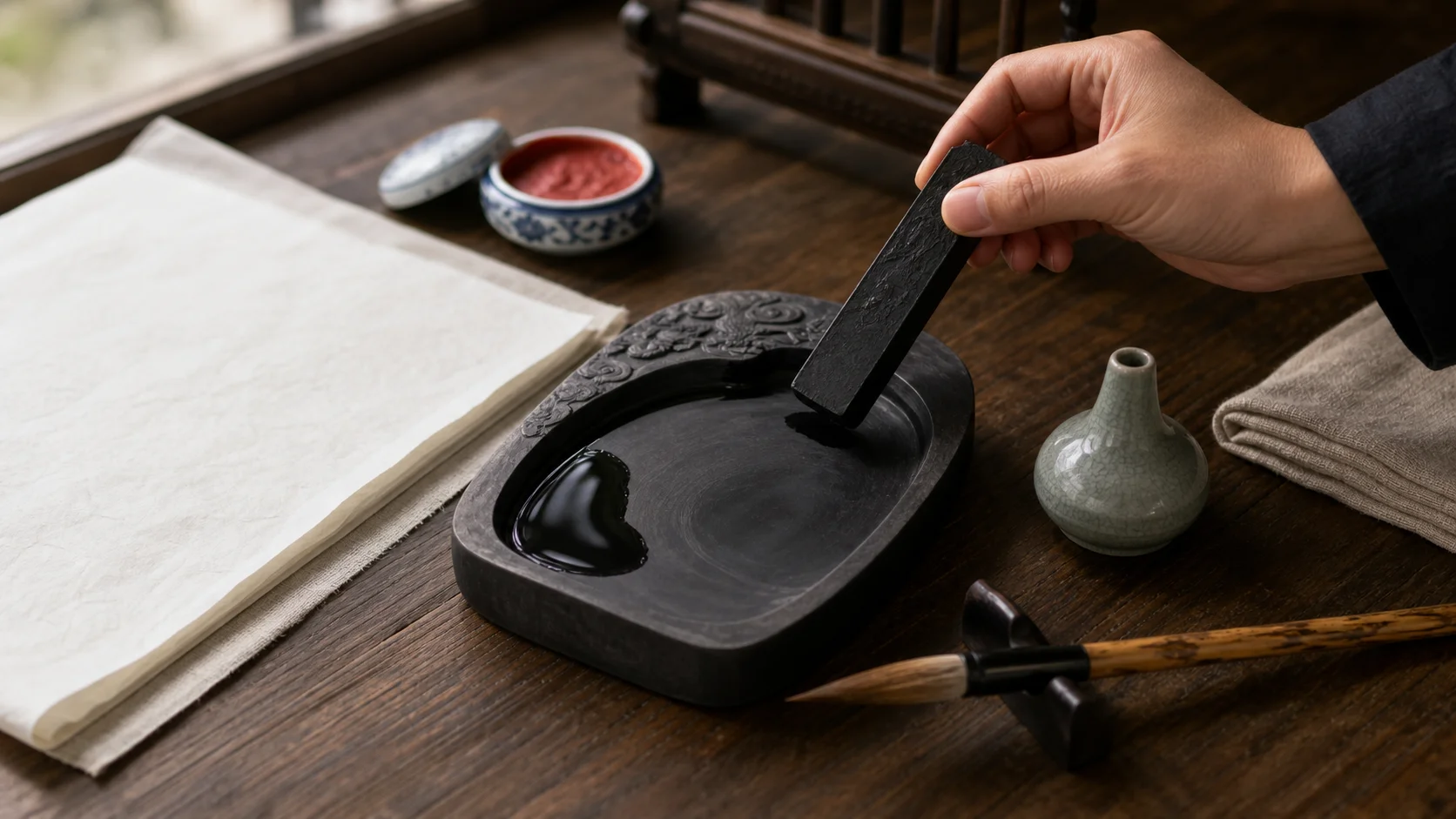
An inkstone is a stone or stone-like grinding surface used with an ink stick and water. The user adds a small amount of water to the inkstone, then gently grinds the ink stick in circular or back-and-forth motions until liquid ink forms.
For calligraphy, this process matters because ink thickness affects brush control. Thin ink flows quickly and works well for practice or light strokes. Thicker ink creates deeper black color and stronger brush presence.
A calligraphy inkstone should help the user control this process. It should not feel too rough, too slippery, too shallow, or too unstable.
How to Choose an Inkstone for Calligraphy
Before buying an inkstone, think about how it will be used. A beginner practicing basic strokes needs a different inkstone from a collector buying a carved Duan inkstone for display.
| Feature | What to Look For | Why It Matters |
|---|---|---|
| Grinding surface | Smooth with fine natural texture | Helps create ink without damaging the ink stick |
| Ink pool | Shallow area that can hold enough liquid ink | Makes practice easier and reduces frequent regrinding |
| Weight | Stable enough not to slide | Improves control while grinding ink |
| Size | Large enough for your brush and practice needs | Prevents cramped grinding and messy ink handling |
| Shape | Simple rectangle, oval, round, or carved form | Affects both function and display style |
Best Inkstone Materials
Inkstones can be made from different stones and materials. Some are practical tools for everyday use, while others are valued for history, craftsmanship, texture, and collection meaning.
Duan Inkstone
Duan inkstone is one of the most famous traditional Chinese inkstones. It is often appreciated for its fine texture, ink grinding quality, and cultural prestige. Serious calligraphy users and collectors often pay attention to Duan stone because of its long reputation.
For a deeper guide, read our article on Duan inkstone types and meanings.
She Inkstone
She inkstone is another respected traditional type. It is often associated with a smooth grinding experience and refined cultural character. It may appeal to users who want a more traditional Chinese study-room feeling.
Chengni Inkstone
Chengni inkstones are traditionally made from refined clay rather than carved natural stone. They can have a warm, antique appearance and are often appreciated for their historical style and decorative quality.
Practical Modern Inkstones
Not every user needs a rare or expensive inkstone. For beginners, students, and casual brush practice, a practical modern inkstone can be enough as long as it grinds ink smoothly and is easy to clean.
Inkstone Size Guide
Inkstone size affects comfort. A very small inkstone may look elegant, but it can feel cramped if you use larger brushes or need more ink for long practice sessions.
| User Type | Recommended Inkstone | Reason |
|---|---|---|
| Beginner | Small to medium practical inkstone | Easy to handle, clean, and store |
| Regular calligraphy practice | Medium inkstone with clear ink pool | Comfortable for repeated grinding and brush loading |
| Large brush user | Medium to large inkstone | Holds more ink and gives more grinding space |
| Gift or display buyer | Carved or traditional-style inkstone | Looks meaningful as a cultural object |
Best Inkstone for Beginners
The best beginner inkstone is not necessarily the most expensive one. A beginner should look for stability, easy cleaning, a usable ink pool, and a surface that can grind ink without much frustration.
If you are buying your first inkstone, choose a simple shape and avoid overly decorative pieces that are difficult to clean. You can upgrade later when you understand your brush size, ink preference, and practice habits.
Inkstone and Ink Stick: Do You Need Both?
Traditionally, an inkstone is used together with an ink stick and water. The ink stick is ground on the inkstone to create fresh liquid ink. This gives the calligrapher control over ink thickness and tone.
Bottled ink is convenient, but grinding ink can make the practice feel slower and more focused. Many people enjoy the ritual because it prepares the hand and mind before writing.
If you want to learn the full process, read our guide on how to grind ink using an inkstone.
Is a Duan Inkstone Worth It?
A Duan inkstone can be worth it if you care about traditional Chinese calligraphy tools, material quality, cultural meaning, or collecting. For casual beginners, it may be better to start with a simpler inkstone first.
Choose Duan inkstone when:
- You practice calligraphy regularly.
- You appreciate traditional Chinese scholar objects.
- You want a meaningful cultural gift.
- You care about material history and craftsmanship.
- You want an inkstone that can also be displayed.
Chinese Inkstone vs Japanese Inkstone
Chinese and Japanese inkstones are both used for brush writing and ink grinding, but they belong to different cultural tool traditions. Chinese inkstones are closely connected with the Four Treasures of the Study and scholar culture. Japanese inkstones are often associated with sumi ink practice and Japanese calligraphy.
If your goal is Chinese calligraphy, Chinese painting, or a traditional Chinese study-room display, choose a Chinese inkstone. If your practice is mainly Japanese calligraphy, a Japanese sumi inkstone may feel more aligned with that tradition.
Common Mistakes When Buying an Inkstone
- Choosing only by decoration: a beautiful inkstone should still be usable if you plan to grind ink.
- Buying too small: tiny inkstones can be frustrating for larger brushes.
- Ignoring the grinding surface: the surface should not feel too slippery or too rough.
- Using harsh cleaning methods: inkstones should be cleaned gently and dried properly.
- Confusing display pieces with practice tools: some decorative inkstones are better for display than daily use.
How to Care for an Inkstone
After practice, rinse the inkstone gently with clean water and wipe away remaining ink with a soft cloth or sponge. Avoid harsh detergents, metal brushes, and scraping tools that may damage the grinding surface.
Let the inkstone dry completely before storing it. If it comes with a box or cover, make sure the stone is dry before closing it to avoid trapped moisture.
Final Recommendation
If you want a practical inkstone for calligraphy, choose one that is stable, comfortable to use, and easy to clean. If you want a meaningful Chinese cultural object, look for a traditional inkstone with material story, refined shape, and display value.
A beginner can start simple. A serious user can upgrade to a more refined Chinese inkstone. A collector or gift buyer may prefer a Duan inkstone or a traditional-style piece that carries both function and cultural meaning.
For a broader introduction, visit our guide to the Chinese inkstone.
FAQs About Inkstones for Calligraphy
What is the best inkstone for calligraphy?
The best inkstone for calligraphy has a fine grinding surface, stable base, usable ink pool, and enough size for your brush. Beginners can start with a simple practical inkstone, while advanced users may prefer traditional stones such as Duan inkstone.
Do beginners need an expensive inkstone?
No. Beginners do not need an expensive inkstone. It is better to start with a practical inkstone that is easy to use and clean, then upgrade later if calligraphy becomes a regular practice.
What is a Chinese inkstone used for?
A Chinese inkstone is used to grind an ink stick with water to create liquid ink for calligraphy and painting. It is also one of the traditional Four Treasures of the Study.
Is Duan inkstone good for calligraphy?
Yes. Duan inkstone is one of the most respected traditional Chinese inkstones and is valued for its texture, history, and cultural meaning. It can be a good choice for serious calligraphy users and collectors.
Can I use bottled ink with an inkstone?
Some people use bottled ink for convenience, but the traditional method is to grind an ink stick with water on the inkstone. Grinding ink gives more control over ink thickness and tone.
How do you clean an inkstone?
Clean an inkstone with water and a soft cloth or sponge after use. Avoid harsh detergents, metal tools, and scraping the surface. Let it dry completely before storage.