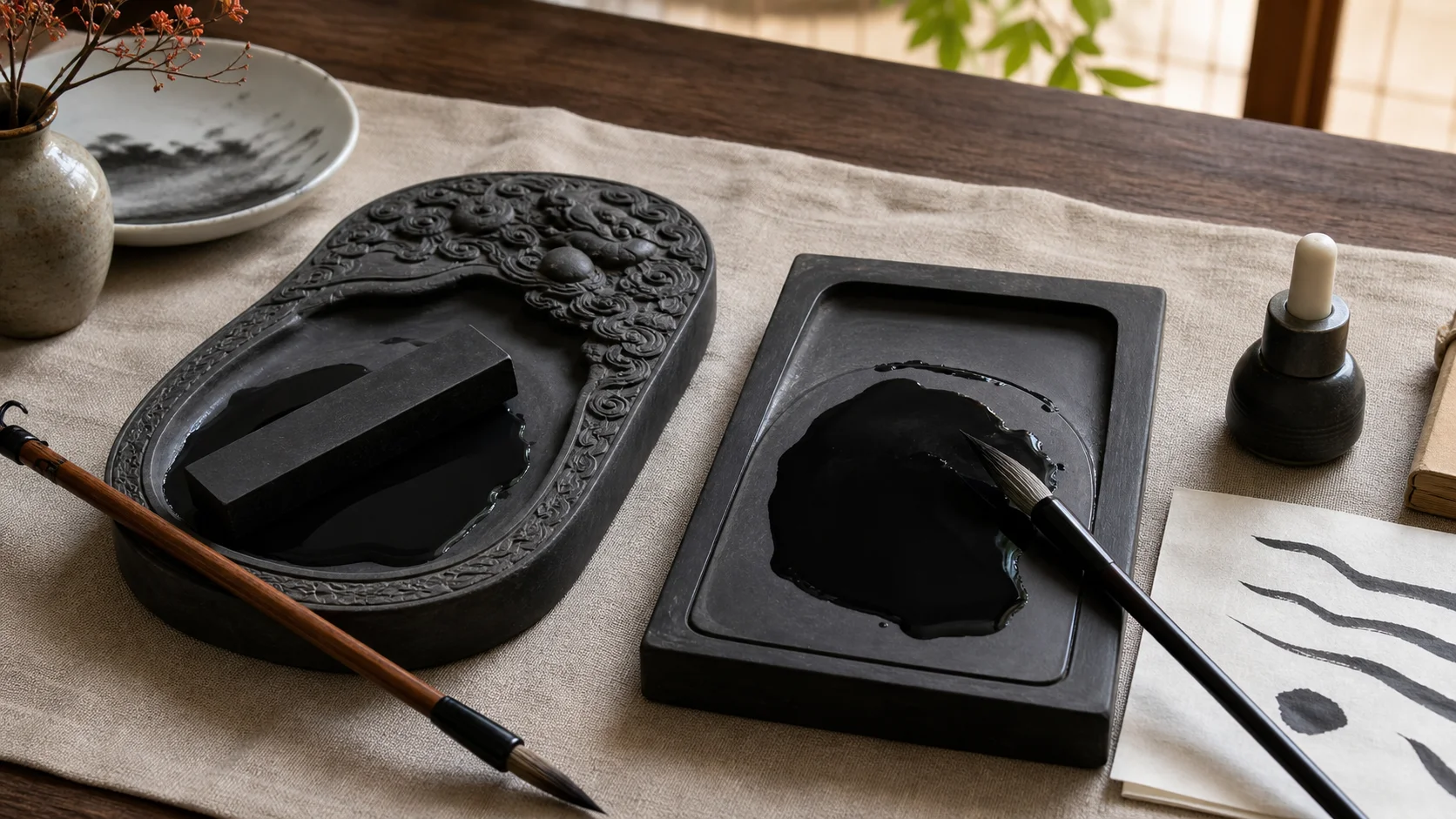
Chinese inkstones and Japanese inkstones look similar at first because both are used to grind an ink stick with water. The real difference is not only the shape of the stone. It is the writing tradition behind it, the type of ink practice it supports, the grinding feel, and the way the tool is used on a desk.
If you are choosing an inkstone for calligraphy, this guide explains the practical differences between a Chinese inkstone and a Japanese inkstone so you can buy the right tool instead of guessing from photos.
Quick Answer: Chinese Inkstone vs Japanese Inkstone
A Chinese inkstone is usually chosen for Chinese calligraphy, brush painting, scholar desk display, and traditional Four Treasures collecting. A Japanese inkstone, often searched as a sumi inkstone, is usually chosen for Japanese shodo, sumi-e painting, and grinding Japanese sumi ink.
For Chinese calligraphy practice or cultural collecting, choose a Chinese inkstone. For Japanese shodo or sumi-e, choose a Japanese inkstone or sumi-e inkstone. For beginners, the most important factor is not country alone, but a smooth grinding surface, stable size, and compatibility with your ink stick.
What Is a Chinese Inkstone?
A Chinese inkstone is a traditional tool used to grind an ink stick into liquid ink for Chinese calligraphy and brush painting. In Chinese culture, the inkstone is one of the Four Treasures of the Study, together with the brush, ink stick, and paper.
Chinese inkstones are not only practical writing tools. Many are also valued as scholar objects, desk ornaments, and cultural collectibles. Some buyers choose a simple practice inkstone, while others look for more decorative forms, carved surfaces, or famous stone types such as Duan inkstone.
For a deeper overview of origin, meaning, and traditional use, see our main Chinese inkstone guide.
What Is a Japanese Inkstone?
A Japanese inkstone is commonly used for shodo, Japanese brush calligraphy, and sumi-e, Japanese ink painting. In English searches, people may call it a Japanese inkstone, sumi inkstone, sumi-e inkstone, or suzuri.
Japanese inkstones are designed for grinding sumi ink with water. Many are simple, practical, and compact, especially for students and everyday practice. Some traditional Japanese inkstones also have collectible value, but most buyers searching online are trying to find a reliable tool for shodo or sumi-e rather than a decorative scholar object.
Chinese vs Japanese Inkstone Comparison
The two tools share the same basic purpose, but they usually serve different calligraphy systems and buyer expectations.
| Feature | Chinese Inkstone | Japanese Inkstone |
|---|---|---|
| Main tradition | Chinese calligraphy and Chinese brush painting | Japanese shodo and sumi-e painting |
| Cultural role | One of the Four Treasures of the Study | A core tool for grinding sumi ink |
| Common buyer intent | Practice, collecting, display, cultural gift | Shodo practice, sumi-e painting, student use |
| Typical look | May be plain, carved, rectangular, round, or decorative | Often simple, compact, and practical |
| Best for | Chinese characters, brush practice, scholar desk styling | Sumi ink, Japanese brushwork, sumi-e wash painting |
Grinding Feel and Ink Quality
The most important working part of any inkstone is the grinding surface. A good surface helps the ink stick release pigment smoothly without feeling too slippery or too rough.
For Chinese calligraphy, many users prefer an inkstone that gives steady control while producing rich ink for brush strokes. For Japanese shodo or sumi-e, users often care about how evenly the stone works with sumi ink and how easily it supports different ink densities, from dark black lines to lighter washes.
This is why country name alone is not enough. A cheap inkstone with a poor surface will not feel good even if it is labeled Chinese or Japanese. A good beginner inkstone should have a flat, stable base, a usable ink pool, and a grinding area large enough for your ink stick.
Shape and Desk Use
Chinese inkstones often appear in a wider range of decorative shapes. Some are designed for daily calligraphy, while others are made to look beautiful on a writing desk, shelf, or display table. This matters if you want an object that works as both a calligraphy tool and a cultural decor piece.
Japanese inkstones are often more function-first, especially in student sets and sumi-e kits. They usually sit neatly beside a brush rest, ink stick, and paper, with a layout that supports repeated practice.
Which Inkstone Should Beginners Choose?
If you are learning Chinese calligraphy, choose a Chinese inkstone or a general calligraphy inkstone made for Chinese brushwork. It will match the cultural context of the writing system and pair naturally with Chinese ink sticks, brushes, and practice paper.
If you are learning Japanese shodo or sumi-e, choose a Japanese inkstone or sumi inkstone. It will be easier to match with Japanese sumi ink and the tools recommended by shodo teachers.
If you are buying your first inkstone as a gift, choose based on the recipient’s practice:
- For Chinese calligraphy: choose a Chinese inkstone.
- For Japanese calligraphy: choose a Japanese inkstone.
- For home decor or cultural display: choose a Chinese inkstone with a stronger visual presence.
- For a student kit: choose a simple, stable inkstone that is easy to clean.
Can You Use a Chinese Inkstone for Japanese Calligraphy?
Yes, you can often use a Chinese inkstone for Japanese calligraphy if the surface grinds well and the ink pool is practical. The inkstone will still grind sumi ink with water. However, if you are following a shodo teacher or working with a traditional Japanese set, a Japanese inkstone may feel more familiar.
Can You Use a Japanese Inkstone for Chinese Calligraphy?
Yes, a Japanese inkstone can work for Chinese calligraphy if it produces a smooth, rich ink and has enough surface area for your ink stick. The main limitation is usually size and style. Some compact sumi inkstones may feel small for larger Chinese brushes or longer practice sessions.
Inkstone and Ink Stick Compatibility
An inkstone and ink stick work as a pair. The stone provides the grinding surface, while the ink stick provides pigment and binder. You add a small amount of water, grind in a controlled motion, and build the ink gradually.
For step-by-step use, read our guide on how to grind ink using an inkstone.
Buying Advice: Which One Should You Buy?
Buy a Chinese inkstone if you want a tool for Chinese calligraphy, Chinese brush painting, scholar desk decor, or a meaningful cultural gift. It is the better fit when the story, tradition, and display value matter as much as the writing function.
Buy a Japanese inkstone if your main focus is shodo, sumi-e, or Japanese sumi ink practice. It is the clearer choice when your teacher, course, or art style follows the Japanese tradition.
If you are still unsure, start with a medium-size, stable inkstone with a clean grinding surface. Avoid choosing only by carving or price. The best inkstone is the one that makes you want to practice more often.
Explore Chinese Inkstones and Calligraphy Tools
If your interest is Chinese calligraphy, scholar desk objects, or meaningful Chinese cultural gifts, start with our Chinese inkstone collection and guide. For beginner buying details, compare size, use case, and gift value in our inkstone for calligraphy buying guide.
Care Tips for Both Types
- Rinse the inkstone gently after use.
- Do not leave thick ink drying on the grinding surface.
- Use clean water instead of harsh cleaners.
- Dry the stone before storing it.
- Keep the ink stick dry after grinding.
Final Recommendation
For Chinese calligraphy, Chinese painting, and cultural display, a Chinese inkstone is the stronger choice. For Japanese shodo and sumi-e, a Japanese inkstone or sumi inkstone is usually more suitable. Both tools can grind ink, but the right choice depends on the tradition you practice and the experience you want at the desk.
FAQ
What is the difference between a Chinese inkstone and a Japanese inkstone?
A Chinese inkstone is traditionally used for Chinese calligraphy and is part of the Four Treasures of the Study. A Japanese inkstone is commonly used for shodo and sumi-e with Japanese sumi ink. They have similar function but different cultural and practical contexts.
Can I use a Chinese inkstone for Japanese calligraphy?
Yes. A Chinese inkstone can be used for Japanese calligraphy if it has a good grinding surface and works well with sumi ink. However, a Japanese inkstone may better match traditional shodo practice.
Can I use a Japanese inkstone for Chinese calligraphy?
Yes. A Japanese inkstone can work for Chinese calligraphy, especially for beginner practice. For larger brushes or longer sessions, a larger Chinese inkstone may feel more comfortable.
Which inkstone is better for beginners?
Beginners should choose based on the calligraphy style they are learning. Choose a Chinese inkstone for Chinese calligraphy and a Japanese inkstone for shodo or sumi-e. A stable base and smooth grinding surface matter more than decoration.
What is a sumi inkstone?
A sumi inkstone is an ink grinding stone used with sumi ink, often in Japanese calligraphy and sumi-e painting. It works by grinding a sumi ink stick with water to create liquid ink.
Do Chinese and Japanese inkstones use the same ink stick?
They can sometimes be used with similar ink sticks, but it is best to match the ink stick to your calligraphy tradition. Chinese calligraphy often uses Chinese ink sticks, while Japanese shodo and sumi-e commonly use sumi ink sticks.