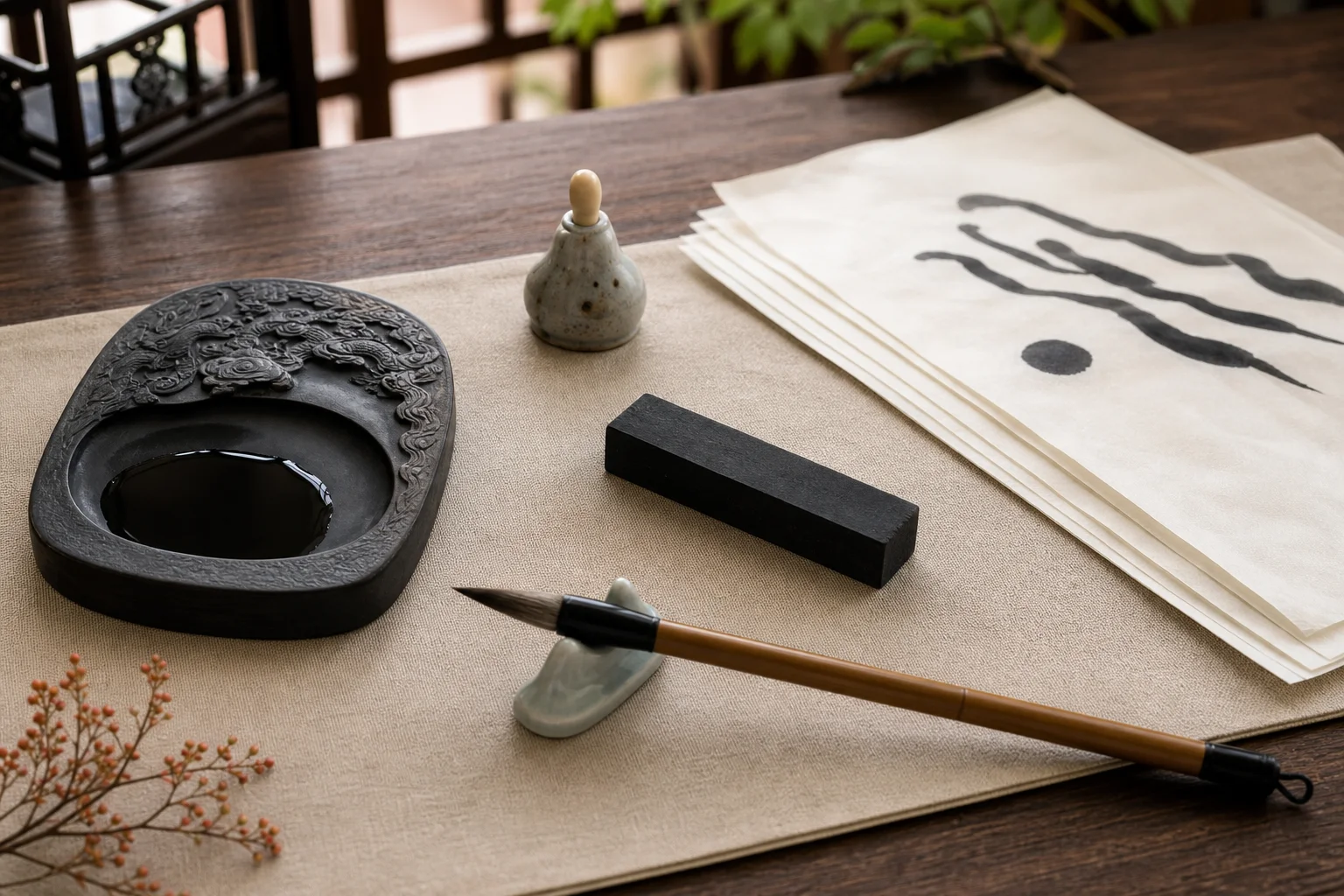
The Four Treasures of the Study are the traditional tools of Chinese calligraphy: brush, ink stick, paper, and inkstone. In Chinese scholar culture, these four objects are more than art supplies. They represent learning, discipline, self-cultivation, and the quiet beauty of writing by hand.
If you are new to Chinese calligraphy tools, the four treasures give you the clearest starting point. The brush creates the stroke, the ink stick provides the pigment, the paper receives the movement, and the Chinese inkstone turns dry ink into liquid ink.
Quick Answer: What Are the Four Treasures of the Study?
The Four Treasures of the Study are the brush, ink stick, paper, and inkstone used in traditional Chinese calligraphy and painting. They are called treasures because they were essential tools for scholars, artists, poets, and officials in historical China.
For beginners, the inkstone and ink stick are especially important because they turn calligraphy into a slower, more mindful practice. Instead of using bottled ink, you grind the ink yourself and control the darkness, texture, and rhythm of the writing session.
Meaning of the Four Treasures of the Study
The Four Treasures of the Study are closely connected to Chinese writing, education, and literati life. A traditional scholar’s desk was not complete without them. These tools were used to write poetry, practice calligraphy, paint landscapes, copy classics, and prepare for official examinations.
Each treasure has its own role, but the deeper meaning comes from how they work together. Chinese calligraphy is not only about the final character on paper. It is about preparation, control, breath, pressure, rhythm, and attention. The tools slow the process down and make writing feel intentional.
1. The Brush: The Tool That Carries Movement
The calligraphy brush is the most visible of the four tools. It holds ink in its hairs and transfers movement from the hand to the paper. A brush can create thin lines, heavy strokes, soft edges, dry texture, and energetic turns depending on pressure and angle.
Chinese calligraphy brushes may use different hair types and sizes. A beginner does not need the most expensive brush. What matters most is a brush that returns to shape well and matches the size of the characters being practiced.
What the brush does
- Creates the shape and energy of each stroke.
- Controls line thickness through pressure.
- Shows the writer’s rhythm and confidence.
- Connects the hand, ink, and paper in one movement.
2. The Ink Stick: The Source of Black Ink
The ink stick is a dry block of ink that is ground with water on an inkstone. It may look simple, but it controls much of the character of the ink. A good ink stick can produce rich black ink, lighter gray washes, and smooth flow for brushwork.
Using an inkstone and ink stick is different from opening a bottle of ink. The grinding process lets you decide how dark or light the ink should be. It also makes the writing session calmer, because preparation becomes part of the practice.
Why use an ink stick instead of bottled ink?
- You can control the ink density.
- The process feels more traditional and mindful.
- It pairs naturally with a Chinese inkstone.
- It creates a stronger connection to classical calligraphy practice.
3. The Paper: The Surface That Reveals the Stroke
Paper is where the brushwork becomes visible. In Chinese calligraphy, the paper must respond to ink quickly enough to show movement, but not so unpredictably that beginners lose control.
Many people call Chinese calligraphy paper “rice paper” in English, but traditional practice paper can vary in fiber, absorbency, thickness, and finish. Beginners often start with practice paper before moving to more refined paper for finished work.
What to look for in calligraphy paper
- Enough absorbency to show brush texture.
- Not so thin that it tears easily during practice.
- A size that matches your brush and character scale.
- A surface that makes stroke control easier to observe.
4. The Inkstone: The Center of the Writing Desk
The inkstone is the tool used to grind an ink stick with water. It usually has a grinding surface and a small ink pool. When you move the ink stick across the stone, the water gradually turns into liquid ink.
Among the Four Treasures, the inkstone often has the strongest sense of permanence. Brushes wear down, paper is used, and ink sticks slowly disappear. A good Chinese inkstone can stay on the desk for years as both a working tool and a cultural object.
If you want to understand practical buying factors, see our inkstone for calligraphy buying guide. If you want to compare traditions, read Chinese inkstone vs Japanese inkstone.
What makes an inkstone useful?
- A smooth but effective grinding surface.
- A stable shape that does not slide easily.
- An ink pool large enough for your practice session.
- A size that matches your brush and ink stick.
- A design that feels comfortable on your desk.
How the Four Treasures Work Together
The four tools are designed to function as a system. You add water to the inkstone, grind the ink stick until the ink reaches the right darkness, load the brush, and write on paper.
This sequence is simple, but it teaches patience. The ink is not ready instantly. The brush must be held with care. The paper records hesitation and confidence. The inkstone gives the practice a physical center.
| Treasure | Role | Beginner Tip |
|---|---|---|
| Brush | Creates the stroke | Choose a size that matches your practice paper. |
| Ink stick | Provides pigment | Start with a reliable black ink stick. |
| Paper | Receives the brushwork | Use practice paper before expensive paper. |
| Inkstone | Grinds ink with water | Choose a stable stone with a usable ink pool. |
How to Choose a Beginner Four Treasures Set
A beginner does not need museum-level tools. The first goal is to build a set that feels comfortable enough for regular practice. Choose practical tools first, then upgrade slowly as your hand becomes more sensitive.
Beginner buying checklist
- Brush: medium size, easy to control, suitable for regular characters.
- Ink stick: black ink stick for everyday practice.
- Paper: affordable practice paper with consistent absorbency.
- Inkstone: stable, easy to clean, not too small for grinding.
If you are buying one piece first, start with the inkstone. It is the tool that stays on the desk and supports the whole ink-making process. A beautiful inkstone also works as a meaningful cultural object even when it is not in use.
Start with a Chinese Inkstone
For Chinese calligraphy practice, scholar desk styling, or a meaningful cultural gift, a Chinese inkstone is one of the best pieces to begin with. It connects directly to the Four Treasures of the Study and gives the writing desk a traditional center.
Why the Four Treasures Make a Meaningful Gift
The Four Treasures of the Study are thoughtful gifts because they carry cultural meaning. They are suitable for calligraphy students, Chinese culture lovers, artists, collectors, teachers, and anyone interested in mindful creative practice.
An inkstone is especially giftable because it feels substantial and lasting. It can be used for writing, displayed on a shelf, or placed on a desk as a symbol of learning and refinement.
How to Care for the Four Treasures
- Rinse the inkstone gently after use and dry it before storing.
- Do not leave thick ink drying on the grinding surface.
- Keep the ink stick dry after grinding.
- Wash brushes carefully and let them dry with the tip shaped properly.
- Store paper flat in a dry place away from moisture.
For detailed ink preparation, follow our guide on how to grind ink using an inkstone.
Final Thoughts
The Four Treasures of the Study are simple objects, but together they create one of the most important traditions in Chinese art. The brush gives movement, the ink stick gives depth, the paper reveals the stroke, and the inkstone prepares the ink.
If you want to begin with one lasting piece, choose a Chinese inkstone. It is practical, beautiful, and deeply connected to the history of Chinese calligraphy.
FAQ
What are the Four Treasures of the Study?
The Four Treasures of the Study are the brush, ink stick, paper, and inkstone used in traditional Chinese calligraphy, painting, and scholar culture.
Why are they called treasures?
They are called treasures because they were essential tools for scholars, artists, poets, and calligraphers. They were valued not only for function but also for cultural meaning.
Which of the Four Treasures should beginners buy first?
Beginners need all four tools to practice traditionally, but the inkstone is often the best lasting piece to buy carefully because it supports ink grinding and can remain on the desk for years.
What is the inkstone used for?
The inkstone is used to grind an ink stick with water to make liquid ink for calligraphy or brush painting.
Can I use bottled ink instead of an inkstone and ink stick?
Yes, bottled ink can be used for convenience, but grinding ink with an inkstone and ink stick gives more control over ink density and creates a more traditional calligraphy experience.
Are the Four Treasures still used today?
Yes. They are still used by calligraphy students, artists, collectors, teachers, and people interested in Chinese cultural practice.