Introduction: Why Objects Matter in Chinese Folk Beliefs
In traditional Chinese culture, everyday objects are rarely seen as purely functional.
From festival decorations to scholar tools and household crafts, many items carry symbolic meanings tied to protection, blessing, and harmony.
These objects are deeply rooted in folk beliefs shaped by centuries of lived experience. Rather than relying on abstract concepts, Chinese tradition expresses spiritual wishes through tangible crafts—items that can be seen, touched, and placed within daily life.
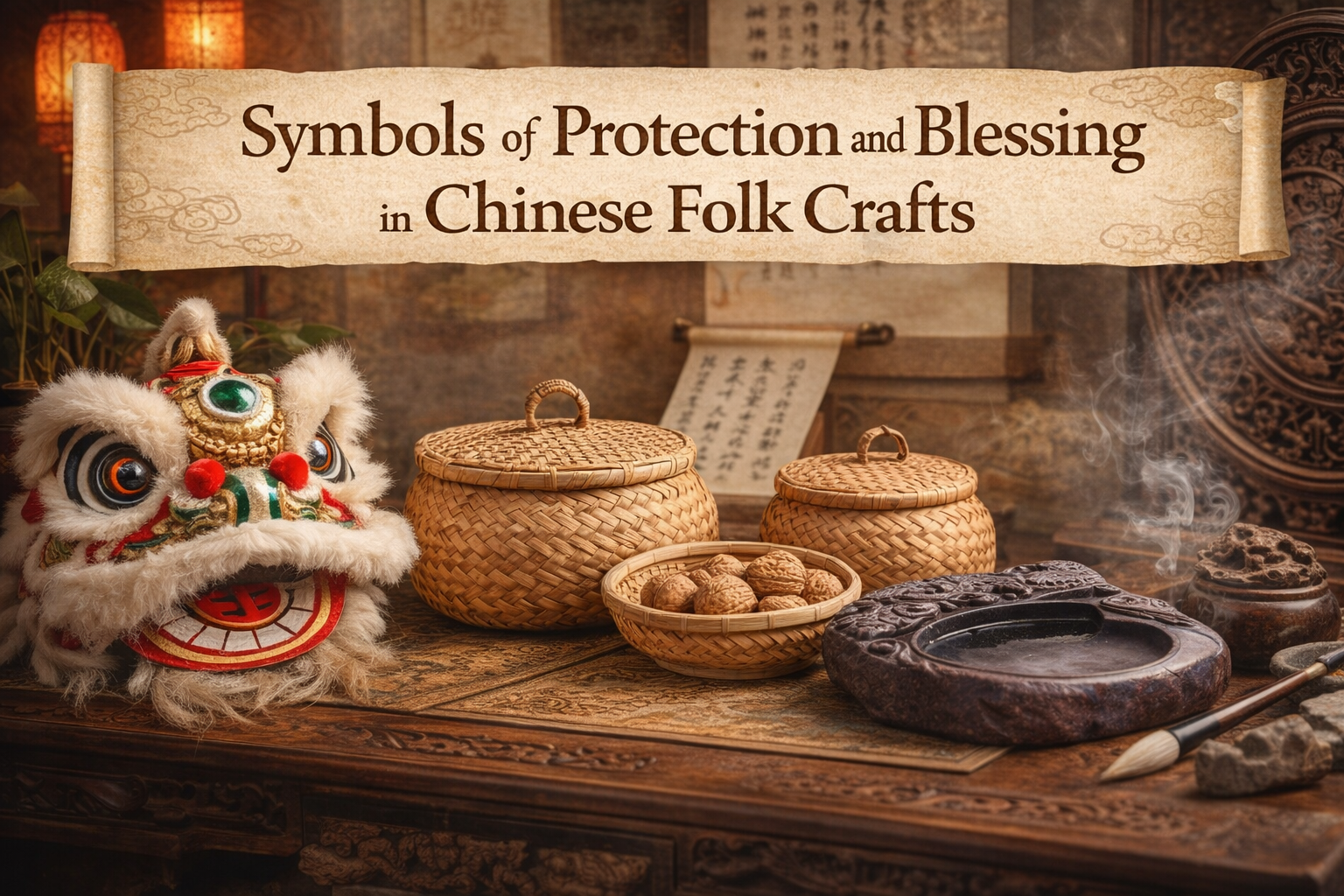
Among these, folk crafts such as lion dance heads, bamboo weaving, and traditional inkstones play a unique role in representing protection, prosperity, and well-being.
Protection Through Symbolism: The Role of Chinese folk crafts
Protection in Chinese folk culture does not only mean warding off danger. It also includes:
- Maintaining balance within the household
- Creating psychological stability
- Establishing a sense of order and continuity
Handcrafted objects often serve as symbolic anchors, helping people feel connected to tradition and protected within their environment.
Lion Dance: A Guardian of Space and Spirit
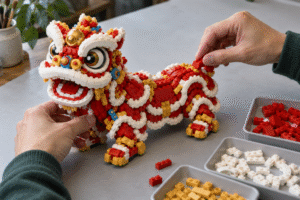
The lion dance is one of the most recognizable symbols of protection in Chinese folk culture. Traditionally performed during Lunar New Year, temple festivals, and important openings, the lion is believed to drive away negative forces and welcome good fortune.
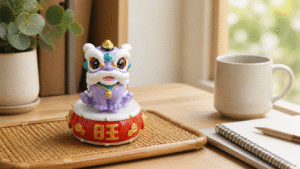
Lion dance heads are often crafted with bold colors, exaggerated features, and expressive eyes. These visual elements are not decorative alone—they are meant to convey strength, vigilance, and authority.
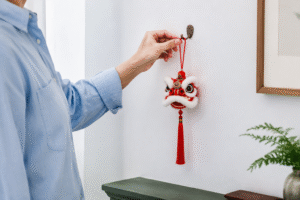
In many households and cultural spaces, lion dance heads are displayed as protective symbols, especially during festive seasons or after major life transitions such as moving into a new home or opening a business.
Suggested internal link:
Lion Dance Head Collection → Heritage Crafts / Lion Dance Head
Bamboo Weaving: Order, Stability, and Quiet Blessings
Bamboo has long been associated with resilience, humility, and integrity in Chinese philosophy. As a natural material that bends without breaking, bamboo symbolizes strength through flexibility.
Handwoven bamboo baskets and containers are more than storage solutions. In folk belief, order within the home reflects harmony within life. A well-organized living space is thought to support emotional balance and stable fortune.
Bamboo weaving embodies the idea of working with nature rather than against it. The repetitive, methodical weaving process reflects patience and continuity—qualities that are quietly associated with long-term blessings.
Suggested internal link:
Handwoven Bamboo Crafts → Bamboo Storage Baskets / Handwoven Bamboo
Inkstones: Cultivating Wisdom and Auspicious Energy
The inkstone, one of the Four Treasures of the Chinese Scholar, represents intellectual protection and spiritual grounding. Traditionally placed in study rooms, inkstones were believed to support clarity of thought, discipline, and moral cultivation.
In folk belief, inkstones are associated with the Wenqu Star, symbolizing academic success and wisdom. Beyond writing, they are often kept as cultural objects that embody calm energy and scholarly focus.
Different types of Duan inkstones are traditionally associated with specific symbolic meanings—ranging from academic fortune to prosperity and harmony—making them important cultural artifacts rather than simple tools.
Suggested internal link:
Inkstone Crafts → Chinese Inkstone / Duan Inkstone Collection
Blessing Through Craftsmanship: Why Handmade Matters
What connects these crafts is not only symbolism, but the act of making itself.
Handcraftsmanship reflects:
- Respect for materials
- Continuity of tradition
- Intentional creation
In Chinese folk culture, objects made by hand are believed to retain the maker’s focus and sincerity. This belief strengthens the idea that handcrafted items carry a quieter, more personal form of blessing compared to mass-produced goods.
Crafts as Cultural Anchors in Modern Life
In contemporary settings, traditional crafts continue to serve as meaningful symbols. Whether displayed in homes, offices, or cultural spaces, these objects offer a sense of grounding in a fast-changing world.
They remind us that protection and blessing are not always dramatic gestures, but often found in quiet rituals, thoughtful placement, and objects with history.
Conclusion: Living with Meaningful Objects
Chinese folk crafts are not merely remnants of the past. They are living symbols, woven into daily life to express hopes for safety, harmony, and prosperity.
By understanding the meanings behind lion dance heads, bamboo weaving, and inkstones, we gain insight into a cultural system where craft, belief, and daily living are inseparable.