Introduction
A Duan inkstone is not just a tool for grinding ink. In Chinese scholar culture, it represents discipline, cultivated living, and symbolic meaning. Because Duan stones come from different origins and stone types, choosing the right one depends on your purpose—study, business, home harmony, or collecting.
This guide explains how to choose a Duan inkstone in a practical way while respecting the cultural symbolism behind each type.
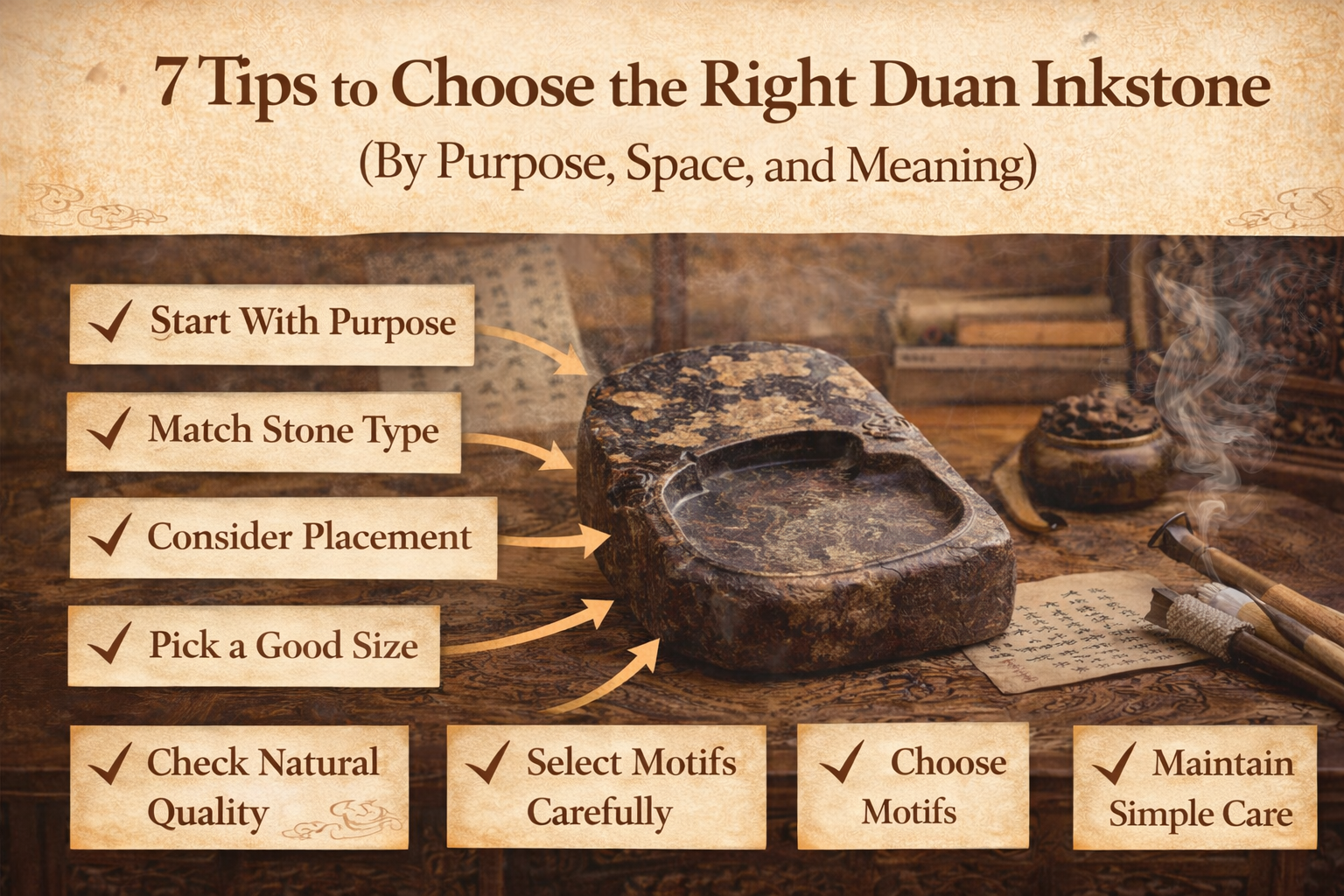
1) Start With Your Purpose, Not the Pattern
Before looking at texture or carving, decide what you want the inkstone for:
- Study & creativity (students, writers, creators)
- Business & stability (office, leadership, long-term work)
- Home harmony & blessings (living room display, gifts)
- Cultural collecting (heritage value and calm presence)
Purpose-first selection helps you avoid buying something beautiful but mismatched to your space and intent.
2) Match Stone Type to Cultural Meaning
Different Duan inkstones are traditionally associated with different symbolic meanings:
- Kengzai Duan inkstone → wisdom, academic fortune, focus
- Mazikeng Duan inkstone → wealth retention, stability, grounded energy
- Meihuakeng Duan inkstone → blessings, harmony, auspicious beginnings
- Song Keng Duan inkstone → scholarly lineage, heritage, continuity
- Zi Duan (purple Duan stone) → nobility, authority, elevated wisdom
If you prefer an inkstone as a cultural artifact, this symbolic layer matters as much as appearance.
3) Consider Where You Will Place It
Placement influences both practicality and atmosphere:
- Study / desk: choose a calm, refined piece (Kengzai, Song Keng, Zi Duan)
- Office / business space: grounded and stable presence (Mazikeng, Zi Duan)
- Living room / display: auspicious patterns and gentle energy (Meihuakeng)
A meaningful inkstone feels “right” in its environment—quiet, stable, and intentional.
4) Choose a Size That Fits Your Use
- Display-focused: medium to large piece with strong presence
- Occasional grinding: medium size is most comfortable
- Compact desk setup: small to medium, easy to maintain
A good inkstone should feel balanced on the desk and easy to care for.
5) Look for Natural Character, Not Over-Decoration
Collectors often prefer inkstones that preserve the stone’s natural texture and character. Excessive artificial polishing or overly dramatic decoration can weaken the feeling of authenticity.
A well-chosen Duan inkstone usually has:
- a calm, dense body
- a smooth working surface
- natural patterns that look “grown,” not forced
6) If You Value Symbolism, Choose Motifs Carefully
In folk tradition, motifs can reinforce meaning:
- For learning: scholar-themed carvings, auspicious patterns linked to wisdom
- For wealth: water-flow or reservoir symbolism (retaining, gathering)
- For home blessings: plum blossom symbolism, gentle auspicious imagery
- For protection: strong, calm forms that feel anchored and stable
Even without heavy symbolism, a well-crafted inkstone naturally communicates stillness and strength.
7) Maintain the Inkstone With Simple Ritual Care
Whether you use it for ink grinding or display, simple care keeps it looking and feeling right:
- wipe gently with clean water
- avoid leaving the ink basin dry for long periods if you’re emphasizing “gathering” symbolism
- store away from harsh sunlight and extreme dryness
A Duan inkstone is best appreciated slowly—like a cultural companion, not a disposable tool.
Conclusion
Choosing the right Duan inkstone is less about chasing the most famous name and more about aligning purpose, space, and meaning. When selected thoughtfully, an inkstone becomes a quiet symbol of discipline, stability, harmony, and cultivated living.