History, Meaning & Modern Use
Introduction
Bamboo weaving is one of the oldest traditional crafts in Chinese folk culture. Using split bamboo strips, artisans create functional objects that reflect both craftsmanship and cultural values. Beyond utility, bamboo weaving carries symbolic meaning related to balance, protection, and harmony.
This article explores the history of bamboo weaving in Chinese folk crafts, its cultural meaning, and how bamboo weaving is used in modern homes today.
What Is Bamboo Weaving?
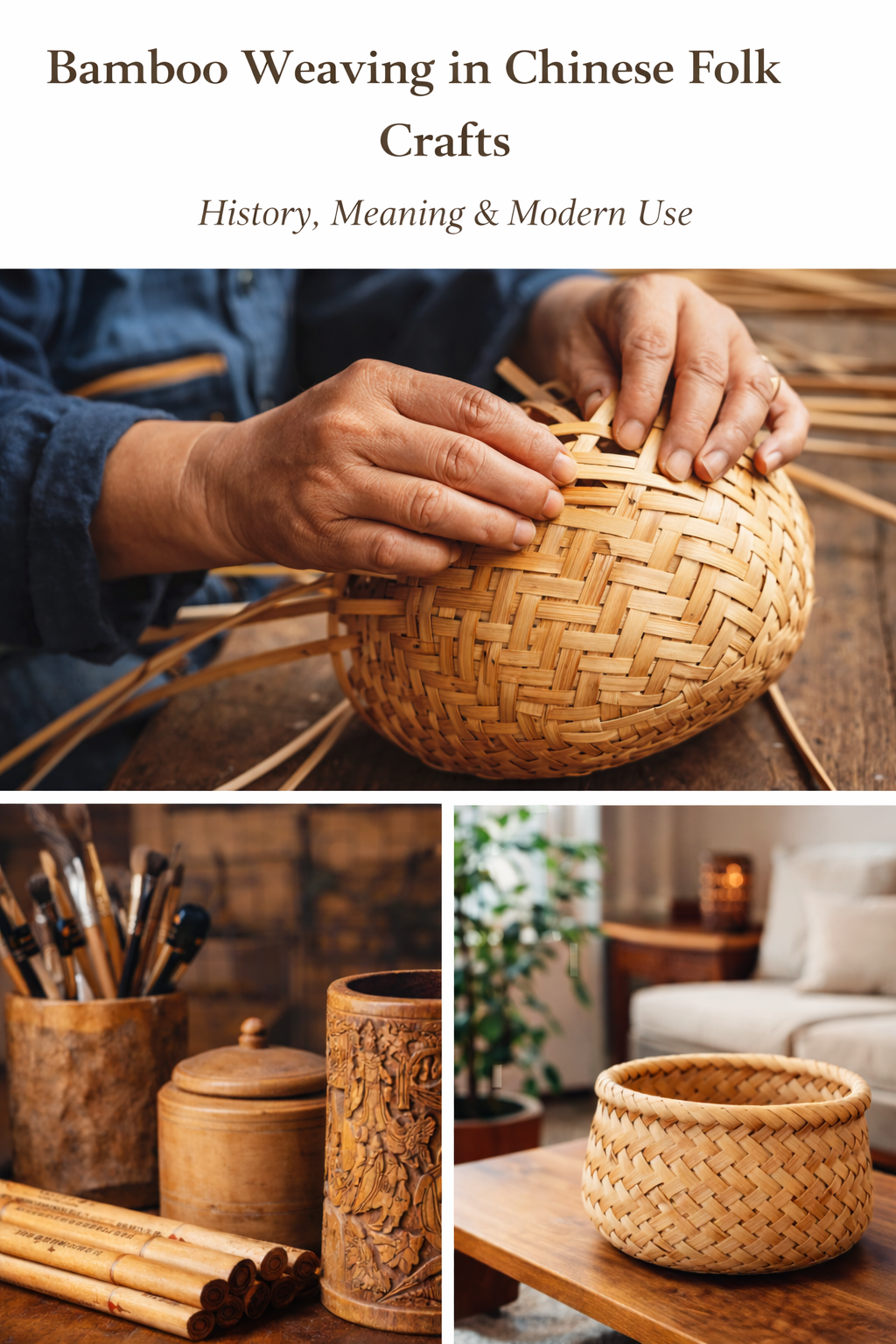
Bamboo weaving is a traditional craft that involves splitting bamboo into thin strips and interlacing them to form durable objects. The technique has been passed down for generations, especially in rural communities where bamboo was abundant.
Common bamboo weaving products include:
- Storage baskets
- Containers and trays
- Household tools
These objects were designed for daily use, making bamboo weaving an integral part of everyday life.
The History of Bamboo Weaving in Chinese Culture
Bamboo weaving dates back thousands of years in China. Early communities used bamboo because it was flexible, strong, and readily available.
Historically, bamboo weaving was valued for:
- Practical household use
- Longevity and durability
- Sustainable material sourcing
Over time, weaving techniques became more refined, and regional styles began to emerge across China.
Cultural Meaning of Bamboo Weaving
Bamboo weaving represents more than craftsmanship—it reflects cultural beliefs.
In Chinese culture, bamboo weaving symbolizes:
- Protection through structure and order
- Balance between strength and flexibility
- Harmony with nature
Because woven bamboo objects were part of daily routines, their protective meaning was subtle and continuous rather than symbolic or ritualistic.
Bamboo Weaving as a Protection Craft
Unlike overt protection symbols, bamboo weaving offers quiet protection. The woven structure represents stability and containment, while the bamboo material itself symbolizes resilience.
This is why bamboo weaving has traditionally been used for:
- Storing important household items
- Organizing living spaces
- Creating order in daily life
Protection here is practical and symbolic at the same time.
How Bamboo Weaving Is Used in Modern Homes
Today, bamboo weaving has found new relevance in modern interiors. Many people value bamboo weaving for its natural texture and cultural depth.
Modern uses include:
- Handwoven storage baskets
- Decorative bamboo containers
- Minimalist home décor
These items blend seamlessly into contemporary spaces while preserving traditional meaning.
Bamboo Weaving vs Mass-Produced Decor
Compared to mass-produced décor, bamboo weaving offers a different kind of value.
| Aspect | Bamboo Weaving | Mass-Produced Decor |
|---|---|---|
| Material | Natural bamboo | Synthetic materials |
| Meaning | Cultural and symbolic | Primarily decorative |
| Durability | Long-lasting | Often disposable |
This contrast highlights why bamboo weaving remains relevant in modern living.
Why Bamboo Weaving Matters Today
In a fast-paced world, bamboo weaving represents a slower, more intentional approach to living. It connects people to craftsmanship, tradition, and sustainable values.
Bamboo weaving matters because it:
- Preserves cultural heritage
- Encourages mindful consumption
- Brings warmth and balance into living spaces
Key Takeaways
- Bamboo weaving is a foundational Chinese folk craft
- It combines function, symbolism, and sustainability
- Woven bamboo objects offer quiet protection and balance
- Modern homes continue to embrace bamboo weaving
- Craftsmanship adds meaning beyond decoration
Bamboo weaving reminds us that everyday objects can carry cultural memory and intention.