Introduction
Chinese inkstones have been used for centuries as essential tools in calligraphy and painting. Among them, Duan inkstone is often regarded as one of the most prestigious. However, it is not the only type of traditional Chinese inkstone.
This article compares Duan inkstone with other major Chinese inkstones, explaining their differences in material, cultural meaning, usage, and long-term value—helping readers understand why Duan inkstone holds a unique position.
Overview of Major Chinese Inkstones
Traditionally, Chinese inkstones are often grouped into several major types, each associated with a different region and cultural background:
- Duan inkstone (Guangdong)
- She inkstone (Anhui)
- Taohe inkstone (Gansu)
- Chengni inkstone (Henan, clay-based)
Each type reflects different material properties and cultural preferences.
1. Material and Stone Quality
Duan Inkstone
Made from Duan stone, known for its fine grain, balanced hardness, and smooth ink-grinding surface. It allows controlled ink release and long-term durability.
Other Chinese Inkstones
- She inkstone: harder stone, sharper grinding feel
- Taohe inkstone: dense and heavy, often darker in tone
- Chengni inkstone: clay-based rather than stone, lighter and more decorative
2. Ink Grinding Experience
Duan inkstones are valued for producing even, refined ink without excessive abrasion. This quality was historically favored by scholars who valued control and consistency.
Other inkstones may grind ink faster or more aggressively, which suits certain techniques but can feel less controlled for long writing sessions.
3. Cultural and Symbolic Meaning
Duan inkstone is deeply embedded in Chinese scholar culture, symbolizing discipline, patience, and cultivated living. Many Duan inkstones were passed down through generations as cultural objects rather than replaced tools.
Other inkstones also carry cultural significance but are often associated more with regional craftsmanship than with scholar lineage as a whole.
4. Usage: Tool vs Cultural Artifact
While all inkstones can be used for ink grinding, Duan inkstones are often appreciated today as cultural artifacts, displayed in studies, offices, or living spaces.
Some other inkstones—especially Chengni—are more frequently chosen for decorative or experimental use rather than long-term scholarly practice.
5. Collectibility and Long-Term Value
Duan inkstones, especially those from recognized stone types or historic quarries, are widely collected. Their value lies in:
- material quality
- craftsmanship
- cultural continuity
Other inkstones can also be collectible, but Duan inkstone is more consistently associated with long-term appreciation.
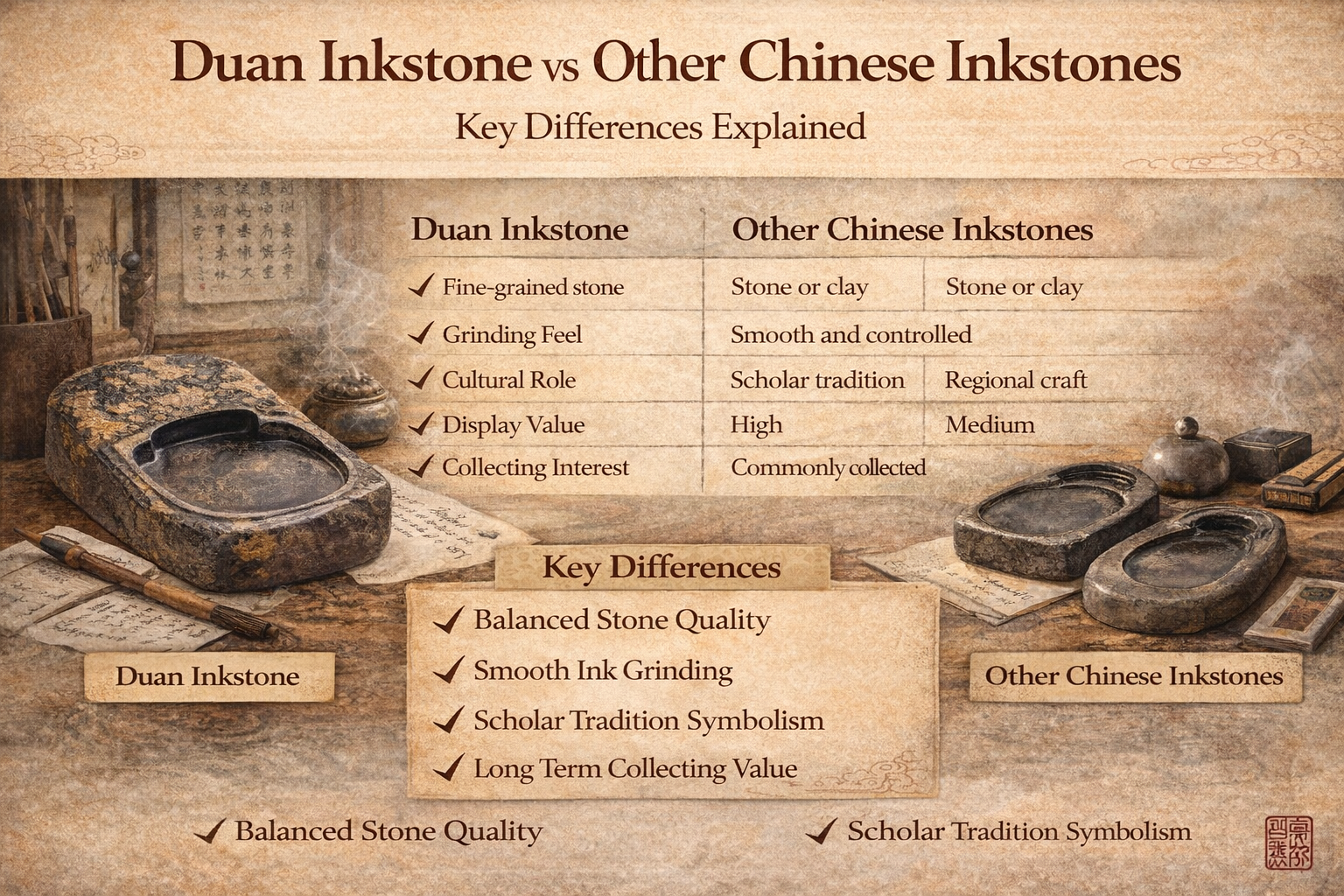
Comparison Summary Table
| Aspect | Duan Inkstone | Other Chinese Inkstones |
|---|---|---|
| Material | Fine-grained stone | Stone or clay |
| Grinding Feel | Smooth, controlled | Varies by type |
| Cultural Role | Scholar tradition | Regional craft |
| Display Value | High | Medium |
| Collectibility | Strong | Varies |
Conclusion
While many Chinese inkstones have historical and artistic value, Duan inkstone stands out for its balance of material quality, cultural symbolism, and long-term significance.
Understanding these differences helps explain why Duan inkstone continues to be favored by scholars, collectors, and those seeking meaningful cultural objects.