If you’re new to Chinese culture, lion dance and dragon dance can look similar at first glance. They’re both colorful, loud, and often performed during festivals. But once you watch them closely, you realize they serve very different roles.
So what’s the real difference between lion dance and dragon dance?
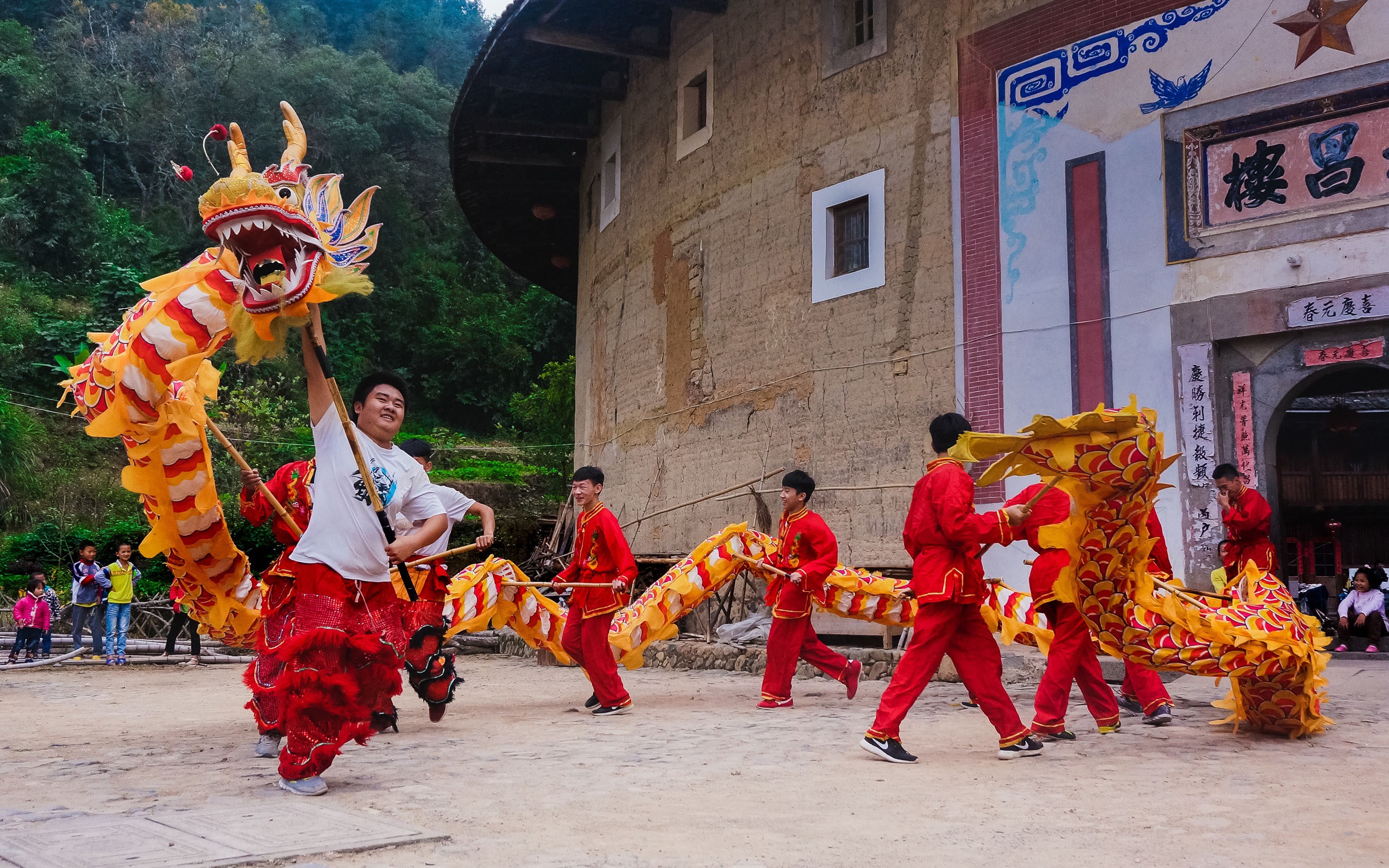
The most obvious difference is the number of performers. A lion dance is performed by two people inside one costume. One controls the head, expressions, and eyes, while the other controls the body and tail. Every movement depends on tight coordination between the two.
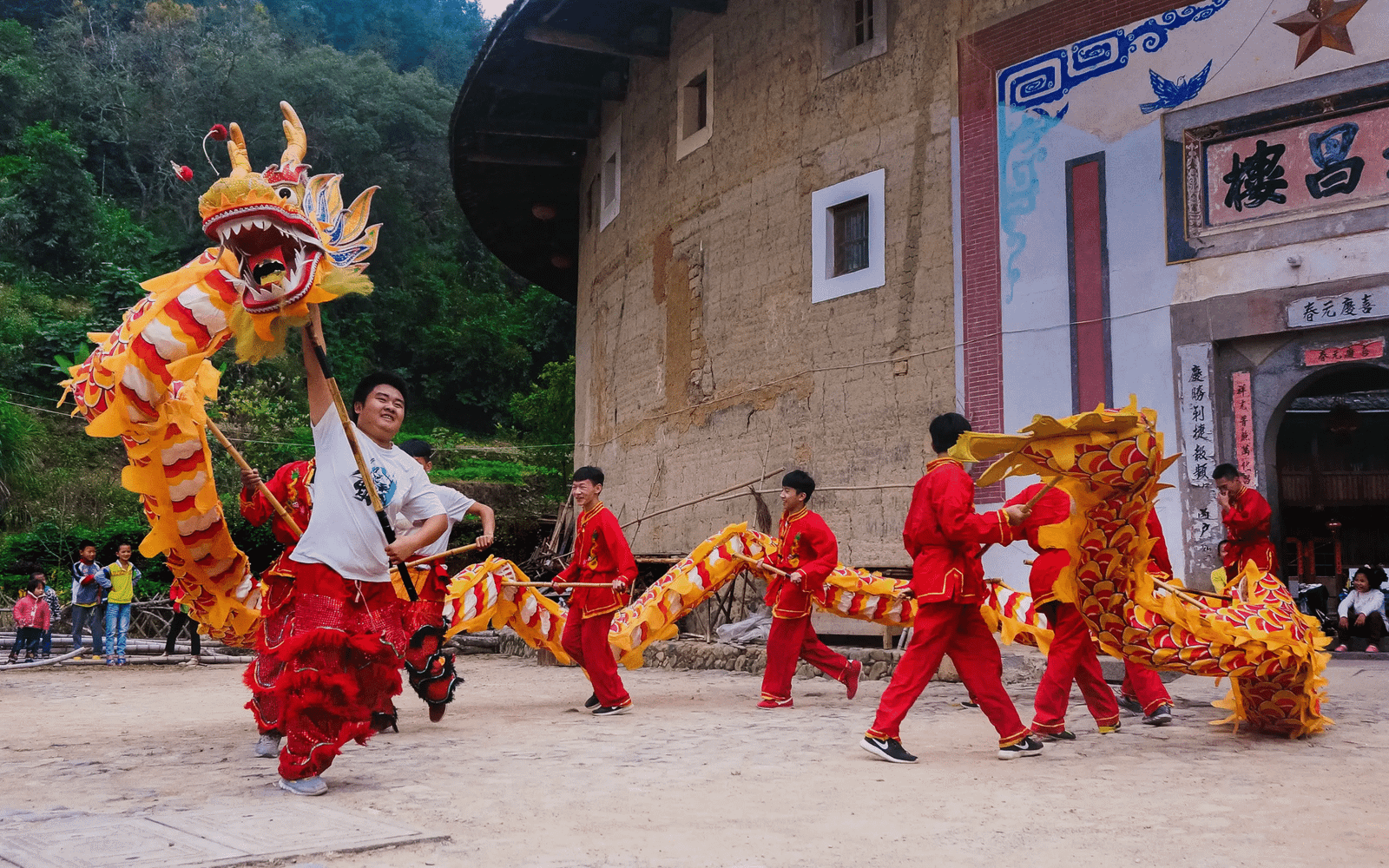
Dragon dance, on the other hand, usually involves many performers, sometimes more than ten. Each person holds a pole that supports a long dragon body. The dance focuses on flowing motion rather than expression.
Another major difference lies in personality.
The lion feels alive. It blinks, bows, scratches, jumps, and reacts to its surroundings. Lion dance performances often feel playful and interactive. The lion may tease the audience, approach children, or respond to the drummer’s rhythm in dramatic ways.
The dragon is more symbolic. It represents power, authority, and control over natural forces. Dragon dance performances emphasize unity and scale rather than emotion. You don’t “meet” the dragon the way you meet the lion—you witness it.
There’s also a difference in where they’re traditionally performed.
Lion dance is commonly seen at:
- Chinese New Year celebrations
- Business openings
- Weddings and community events
Dragon dance is usually reserved for:
- Large festivals
- Parades
- National or city-level celebrations
Because dragon dance requires more people and space, it’s less common in everyday settings.
Culturally, the lion is associated with protection and blessing. It “enters” spaces—shops, homes, streets—to clear away bad luck and bring a good start. That’s why lion dance is so popular for openings and new beginnings.
The dragon, meanwhile, symbolizes power, prosperity, and harmony with nature, especially rain and water. Its role is broader and more ceremonial.
In modern times, both dances are performed worldwide. Schools and cultural organizations often choose lion dance because it’s more flexible and interactive. Dragon dance tends to appear at larger, more formal events.
So when comparing lion dance vs dragon dance, it’s not about which is better. They serve different purposes. One protects and connects closely with people. The other inspires and represents collective strength.
A Simple Way to Remember
Lion dance feels personal.
Dragon dance feels grand.
Both are essential parts of Chinese cultural expression—and both continue to evolve as they spread around the world.