Introduction
Chinese protection symbols are traditional motifs believed to ward off negative energy, bring safety, and attract blessings. For centuries, these symbols have appeared in Chinese folk crafts and everyday objects, reflecting people’s desire for harmony, security, and good fortune in daily life. Even today, these symbols continue to influence home décor, handcrafted art, and cultural design.
This guide explains what Chinese protection symbols mean, where they come from, and how they are used in traditional crafts and modern homes.
What Are Chinese Protection Symbols?
Chinese protection symbols are visual representations—such as animals, characters, plants, or patterns—that symbolize safety, spiritual protection, and balance. They are rooted in ancient beliefs that objects can carry energy and meaning, especially when crafted by hand.
These symbols are commonly found in:
- Folk crafts
- Handwoven bamboo items
- Carvings and figurines
- Decorative objects for the home
Rather than serving a purely decorative purpose, protection symbols are meant to guard households, bring peace, and keep negative forces away.
Why Protection Symbols Are Important in Chinese Culture
In traditional Chinese culture, protection is closely tied to harmony. A safe home is believed to be one where physical space, spiritual energy, and emotional well-being are balanced.
Protection symbols developed from:
- Ancient spiritual beliefs
- Confucian ideas of order and stability
- Folk traditions passed down through generations
By incorporating protective symbols into everyday objects, people expressed hopes for safety, longevity, and prosperity—not only for themselves, but for future generations.
Most Common Chinese Protection Symbols in Folk Crafts
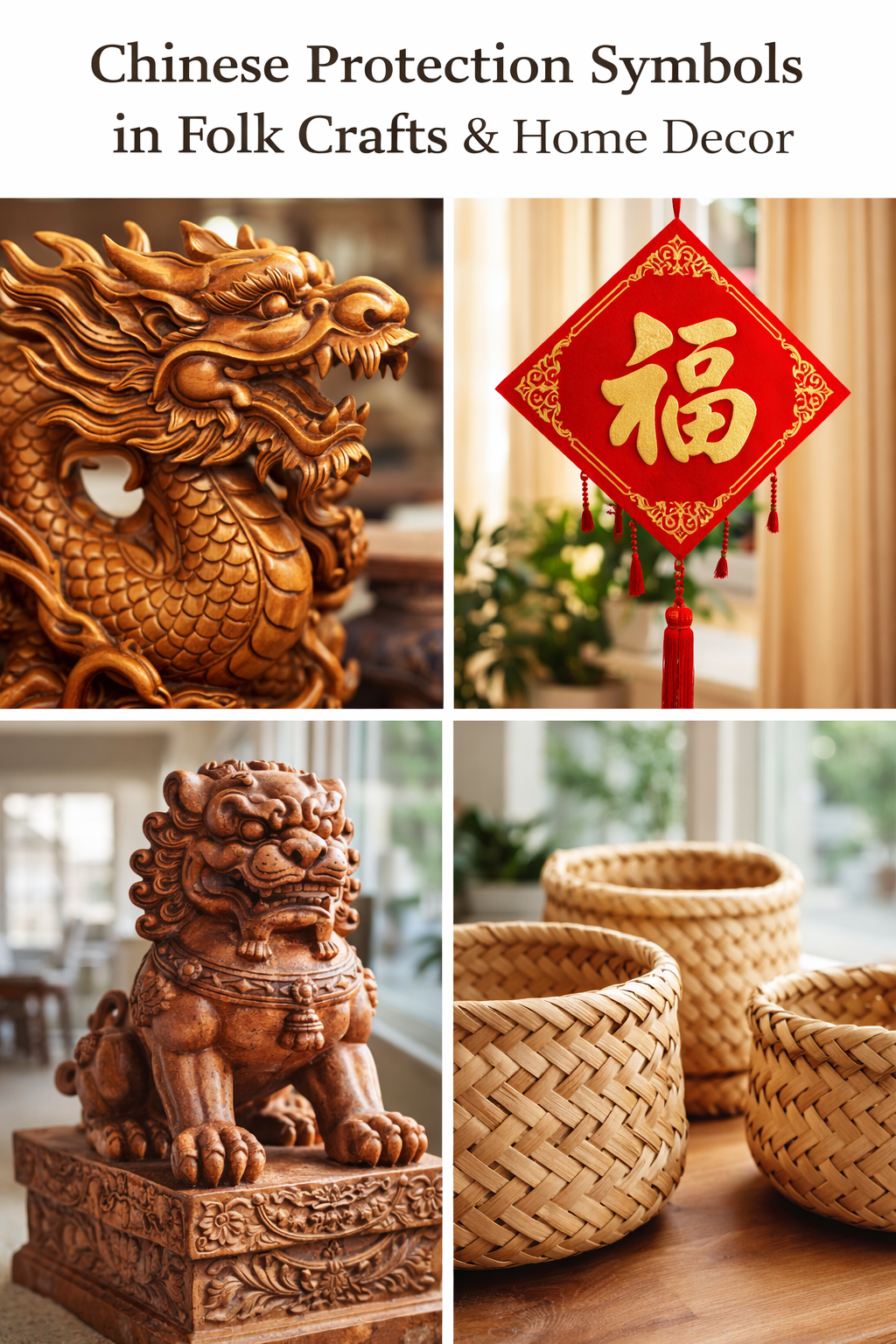
Dragon (龙) — Power and Spiritual Protection
The dragon is one of the strongest protection symbols in Chinese culture. Unlike Western dragons, Chinese dragons symbolize wisdom, strength, and benevolent power.
In folk crafts, dragon motifs are used to:
- Guard homes from misfortune
- Represent authority and positive energy
- Bring protection combined with good luck
Dragons often appear in carvings, decorative objects, and traditional art pieces.
Fu (福) — Blessing and Good Fortune
The Chinese character Fu (福) represents blessing, happiness, and good fortune. While often associated with prosperity, it also carries a protective meaning—inviting positive energy into the home.
Fu symbols are commonly found in:
- Handcrafted decorations
- Traditional ornaments
- Cultural home décor
Displaying this symbol is believed to protect a household by attracting blessings and preventing negative influences.
Guardian Lion (狮) — Protection Against Harm
Guardian lions, sometimes called stone lions, symbolize vigilance and defense. Traditionally placed at entrances, they represent guardianship and strength.
In folk crafts, lion imagery conveys:
- Protection from harmful forces
- Authority and stability
- Safety for families and spaces
Lion motifs are often adapted into smaller decorative crafts for modern homes.
Bamboo — Safety, Growth, and Balance
Bamboo is both a material and a symbol. It represents resilience, flexibility, and steady growth—qualities associated with long-term protection.
In bamboo weaving and crafts, bamboo symbolizes:
- Protection through balance
- Stability during hardship
- A harmonious connection with nature
Because bamboo grows quickly yet remains strong, it has long been associated with safe and sustainable living.
How Protection Symbols Are Used in Traditional Chinese Crafts
Traditional Chinese crafts embed protective symbolism into objects meant for daily use. This makes protection a natural part of everyday life rather than something abstract.
Examples include:
- Bamboo weaving used for storage baskets and home décor
- Hand-carved ornaments featuring symbolic animals
- Decorative items designed for living spaces
The craftsmanship itself adds meaning—handmade objects are believed to carry intention, care, and cultural memory.
How Protection Symbols Are Used in Modern Homes
Today, Chinese protection symbols are often incorporated into modern interiors in subtle ways. Rather than overt ritual objects, they appear as meaningful décor.
Common modern uses include:
- Handwoven baskets made from natural materials
- Decorative objects inspired by traditional motifs
- Minimalist crafts that carry symbolic meaning
Many people choose these items not only for aesthetics, but also for the sense of calm, balance, and security they bring into a space.
Protection Symbols vs Blessing Symbols — What’s the Difference?
Although protection and blessing symbols are closely related, they serve different purposes:
- Protection symbols focus on guarding against harm and negative energy
- Blessing symbols focus on attracting happiness, prosperity, and harmony
In Chinese folk crafts, these meanings often overlap. A single object may represent both protection and blessing, reflecting the belief that safety and happiness are deeply connected.
Key Takeaways
- Chinese protection symbols represent safety, balance, and spiritual harmony
- These symbols are deeply rooted in folk culture and craftsmanship
- Traditional crafts embed protection into everyday objects
- Modern homes continue to use these symbols in meaningful décor
- Handmade crafts carry both cultural significance and personal intention
Chinese protection symbols remind us that objects can hold meaning beyond function—connecting culture, craftsmanship, and daily life.