Opening a new business is more than a financial step.
It is a declaration of intention.
In Chinese culture, one of the most powerful ways to mark this moment is through a lion dance ceremony. From small family shops to major corporate openings, the lion dance has long been a symbol of prosperity, protection, and energetic renewal.
But why is the lion invited to a business opening?
What does it actually represent?
And how is this tradition practiced today?
Why Is Lion Dance Performed at Business Openings?
The lion dance is traditionally associated with:
- Lunar New Year
- Festivals
- Weddings
- Major life milestones
A new business is considered a “new beginning,” much like marriage or the start of a new year. In traditional belief, the early energy surrounding a business determines its future trajectory.
The lion dance is performed to:
✔ Drive away negative influences
✔ Attract prosperity
✔ Energize the space
✔ Symbolically “awaken” the business
It transforms a commercial opening into a ceremonial blessing.
The Symbolism Behind the Ceremony
The Chinese lion represents:
- Strength
- Courage
- Authority
- Protection
- Financial success
In a business context, these qualities are essential.
The lion’s movements during the ceremony are deliberate:
- Entering the doorway symbolizes guarding the entrance
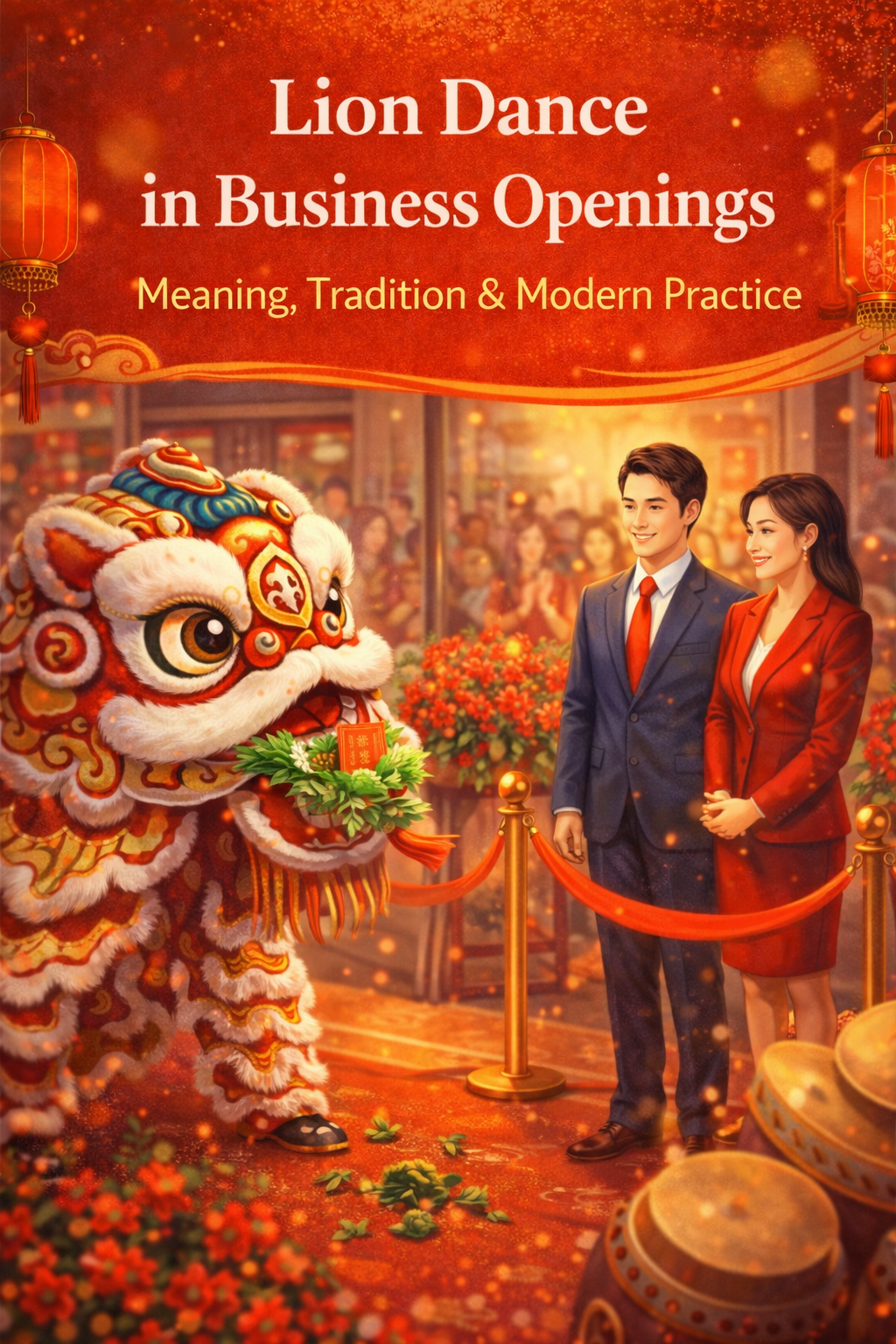
- “Eating greens” (lettuce ritual) symbolizes gathering wealth
- Spitting out the greens represents spreading prosperity
This ritual is known as “Cai Qing” (plucking the greens) — a central element of business opening lion dances.
The Role of Cai Qing (Plucking the Greens)
Cai Qing is one of the most symbolic parts of the performance.
A bundle of lettuce, often tied with a red envelope, is hung above the doorway. The lion:
- Observes
- Jumps to reach it
- “Eats” the greens
- Spits them outward
Lettuce in Cantonese sounds similar to “wealth.” The act symbolizes collecting fortune and distributing prosperity to the business and community.
This is why lion dance is especially popular in retail and restaurant openings.
Why Businesses Still Use Lion Dance Today
Even in modern cities, lion dance ceremonies remain common.
You’ll see them at:
- Restaurant grand openings
- Shopping mall launches
- Corporate headquarters ceremonies
- Small local shop openings
Why?
Because symbolism matters.
Business owners want to:
- Make a strong first impression
- Create an energetic atmosphere
- Show cultural respect
- Attract customers with spectacle
The lion dance does all of this at once.
Southern vs Northern Lion in Business Ceremonies
Most business openings use the Southern Lion style, which emphasizes:
- Expressive facial movement
- Ritual interaction
- Symbolic storytelling
Northern lion dance is more acrobatic and performance-oriented, while Southern lion dance focuses on ritual and blessing — making it ideal for grand openings.
Lion Dance as a Marketing Tool
Beyond symbolism, lion dance serves a practical function:
It attracts attention.
The sound of drums and cymbals draws crowds.
People gather.
Videos are shared.
Foot traffic increases.
In modern business terms, it’s both a cultural ritual and a promotional strategy.
The Emotional Power Behind the Tradition
Opening a business involves risk.
There is uncertainty.
The lion dance acknowledges that uncertainty and responds with confidence. It is not superstition alone — it is a symbolic declaration:
“We begin with strength.”
This emotional layer explains why the tradition has endured for centuries.
Can Lion Symbolism Be Used Without a Full Performance?
Not every business hosts a full lion dance performance.
Some incorporate lion symbolism through:
- Decorative elements
- Symbolic ornaments
- Cultural motifs in branding
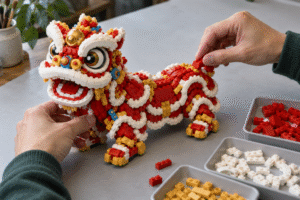
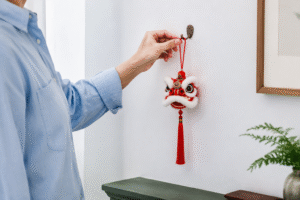
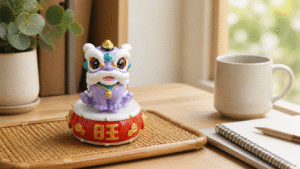
- Small lion-themed charms as gifts
These subtle references still carry the core meaning of protection and prosperity.