Grinding ink with an inkstone is one of the most traditional practices in Chinese calligraphy. For centuries, scholars have used inkstones such as the Duan inkstone to prepare ink for writing and painting.
Unlike bottled ink, grinding ink manually allows artists to control the ink thickness and quality, which is essential for expressive brushwork.
This guide explains the traditional way to grind ink using a Chinese inkstone.
What Is an Inkstone Used For?
An inkstone is a flat stone tool used to grind solid ink sticks with water to produce liquid ink.
The inkstone usually has two parts:
- Ink grinding surface (flat area)
- Ink reservoir (small pool that collects the ink)
When water and ink are ground together, the ink slowly dissolves and forms smooth liquid ink suitable for calligraphy or painting.
Among many types of inkstones, Duan inkstone from Zhaoqing, Guangdong is considered one of the finest because of its smooth and dense stone texture.
Tools You Need
Before grinding ink, prepare the following:
- Chinese inkstone (such as Duan inkstone)
- solid ink stick
- clean water
- Chinese calligraphy brush
- rice paper or calligraphy paper
Traditional scholars would place these tools on a scholar’s desk, known as the “Four Treasures of the Study”.
Step-by-Step Guide to Grinding Ink
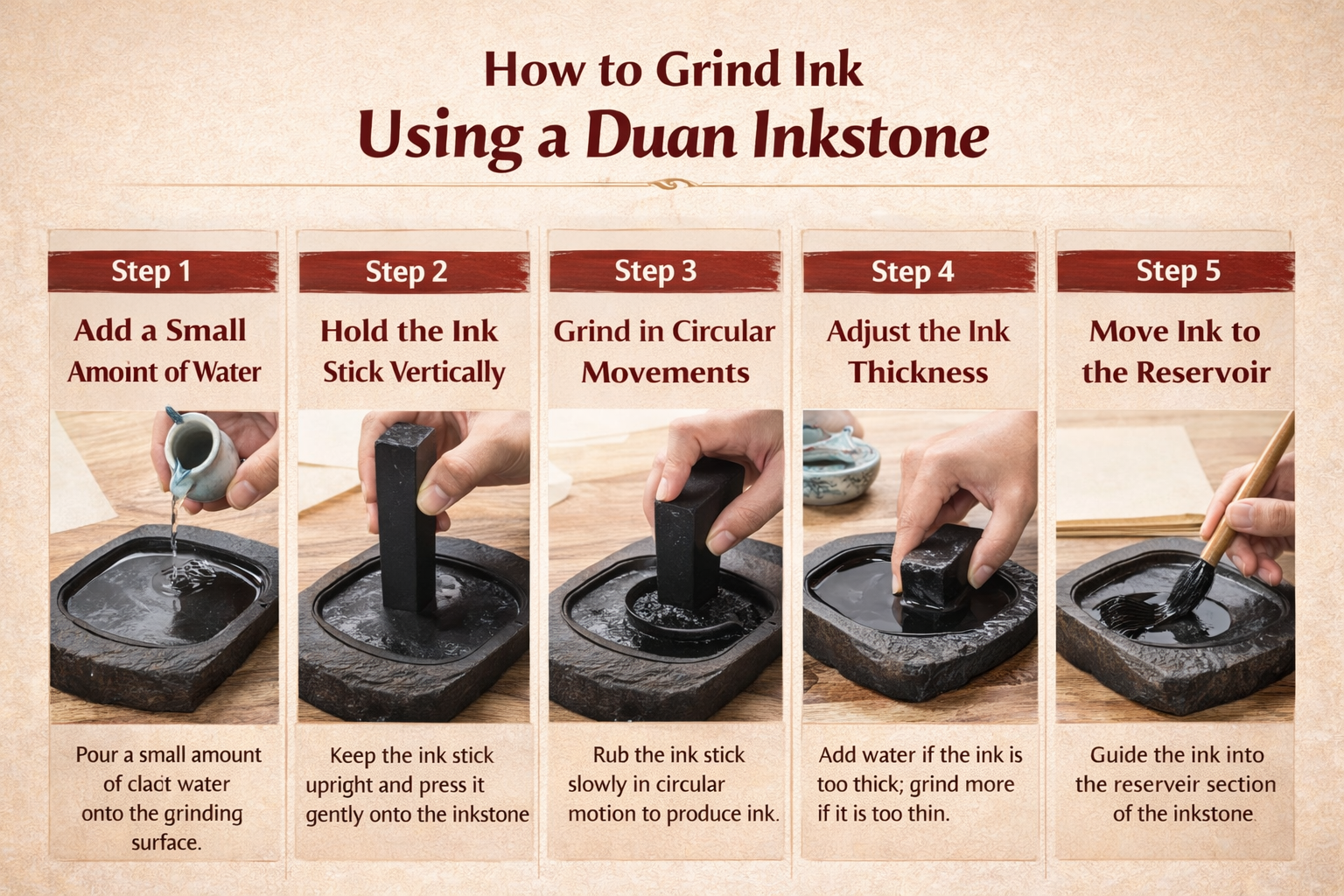
Step 1 Add a Small Amount of Water
Pour a small amount of clean water onto the grinding surface of the inkstone.
Do not fill the reservoir first. Start with just enough water to moisten the surface.
Too much water will make the ink too thin.
Step 2 Hold the Ink Stick Vertically
Hold the ink stick upright and gently press it onto the inkstone surface.
Do not grind at an angle.
Keeping the ink stick vertical ensures even wear and better ink quality.
Step 3 Grind in Circular Movements
Move the ink stick slowly in circular motions.
The friction between the ink stick and the inkstone will gradually dissolve the ink.
This process may take 1–3 minutes depending on how much ink you need.
High-quality inkstones like Duan inkstone make this process smoother and faster.
Step 4 Adjust the Ink Thickness
If the ink becomes too thick, add a few drops of water.
If it is too thin, continue grinding the ink stick.
Experienced calligraphers adjust the ink density depending on the brush strokes they want to achieve.
Step 5 Move Ink to the Reservoir
Once the ink reaches the desired thickness, gently guide the ink into the reservoir section of the inkstone.
This keeps the grinding surface clean while you work.
Why Duan Inkstone Is Ideal for Grinding Ink
Duan inkstones are widely respected among calligraphers for several reasons:
- smooth stone surface
- fast ink grinding
- gentle on brush tips
- durable natural stone
Because of these qualities, Duan inkstones have been used by Chinese scholars for more than 1,300 years.
Common Mistakes Beginners Make
Using Too Much Water
This produces weak ink that lacks depth.
Always start with a small amount of water.
Grinding Too Fast
Grinding quickly can create bubbles and uneven ink.
Slow circular movement produces smoother ink.
Not Cleaning the Inkstone
Ink residue can harden on the surface.
After use, rinse the inkstone with clean water and dry it with a soft cloth.
Final Thoughts
Grinding ink using an inkstone is not just a technical process — it is also a quiet ritual that connects modern calligraphers with centuries of Chinese artistic tradition.
Whether you are a beginner or an experienced artist, using a high-quality inkstone such as a Duan inkstone can greatly improve the ink grinding experience and the quality of your calligraphy.