Introduction: Tradition Meets Everyday Living
As interest in cultural identity and mindful living grows, traditional Chinese crafts are increasingly finding their place in modern homes. Rather than being confined to museums or ceremonial settings, these handcrafted objects now serve as meaningful elements within everyday spaces.
Traditional crafts offer more than visual appeal. They introduce ideas of balance, intention, and continuity—values that resonate strongly with contemporary lifestyles focused on calm, order, and authenticity.
The Role of Traditional Crafts in Modern Interiors
Modern homes often emphasize simplicity and function. Traditional Chinese crafts complement this approach by adding depth and cultural narrative without overwhelming a space.
When thoughtfully placed, handcrafted objects act as quiet anchors—connecting daily life with heritage and intention.
Inkstones in the Modern Study or Workspace
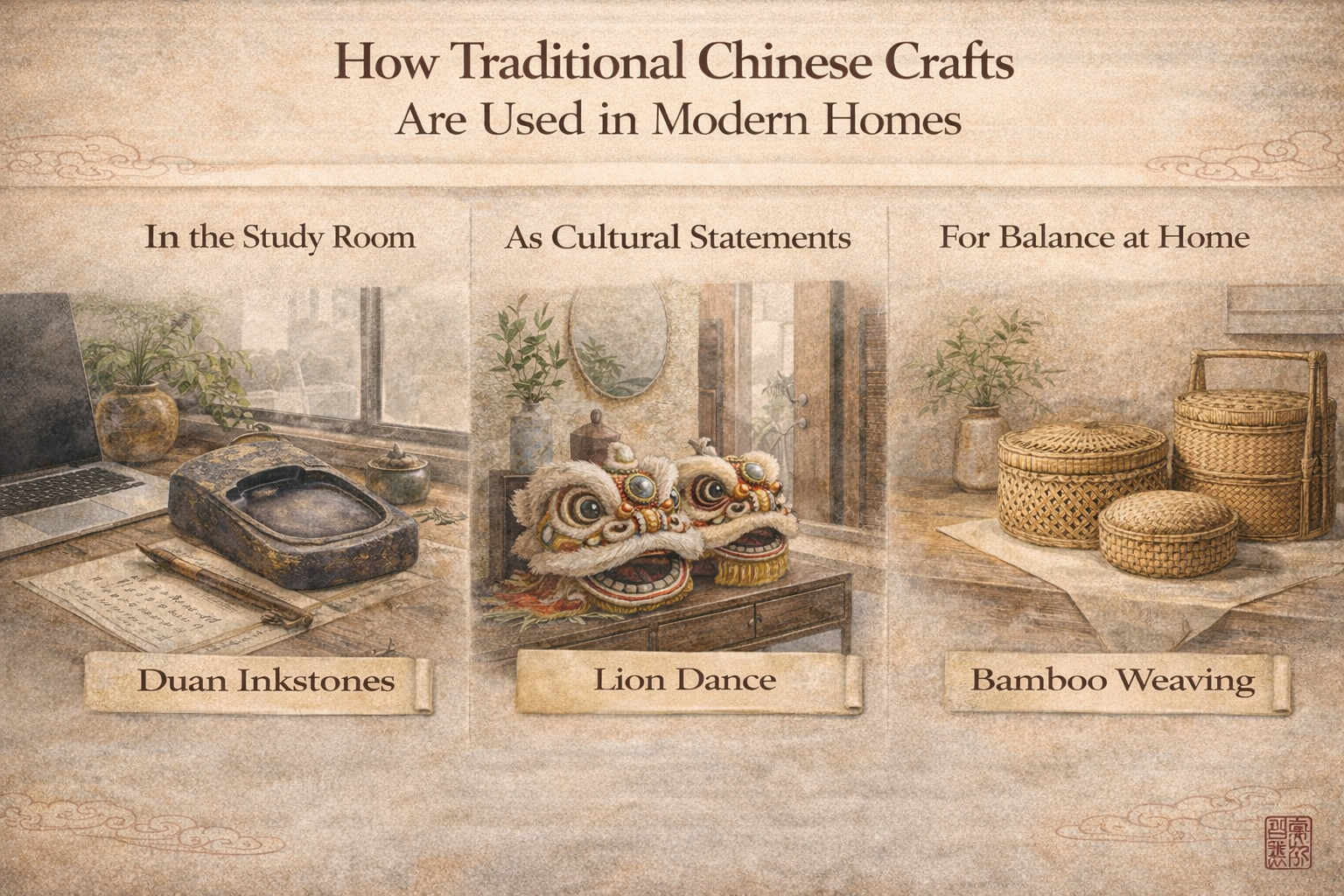
Inkstones, traditionally associated with scholars and learning, adapt naturally to modern workspaces. In home offices or study rooms, an inkstone represents focus, discipline, and intellectual continuity.
Even when not used for writing, inkstones serve as symbolic objects that reinforce the idea of deliberate work and thoughtful progress—qualities valued in both creative and professional environments today.
Lion Dance Artifacts as Cultural Statements
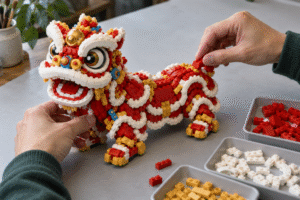
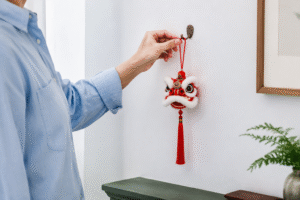
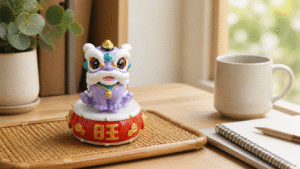
Lion dance artifacts, such as decorative heads or sculptural elements, appear increasingly in modern homes as cultural statements rather than performance tools.
Placed in entryways or display areas, they reflect ideas of protection, vitality, and positive beginnings. In contemporary interiors, these artifacts function as expressive cultural accents that convey confidence and identity.
Bamboo Weaving for Balance and Everyday Order
Bamboo weaving fits seamlessly into modern living through its practicality and natural aesthetic. Baskets, containers, and woven decor pieces support organization while reinforcing harmony within the home.
In traditional thinking, order in physical space contributes to emotional balance. This belief aligns closely with modern preferences for uncluttered, functional living environments.
Blending Craft With Contemporary Design
The key to integrating traditional crafts into modern homes lies in restraint and intention. Rather than filling a space with symbolic objects, selecting a few meaningful pieces allows each craft to retain its presence and significance.
When combined with neutral materials and clean lines, traditional crafts add warmth and character without disrupting modern design principles.
Cultural Continuity Through Living Spaces
Using traditional crafts in modern homes is not about nostalgia. It is about continuity—allowing cultural values to evolve alongside contemporary life.
Through inkstones, lion dance artifacts, and bamboo weaving, traditional Chinese craftsmanship continues to express ideas of balance, purpose, and identity within today’s living spaces.
Conclusion
Traditional Chinese crafts remain relevant because they address timeless human concerns: order, meaning, and connection. In modern homes, these objects serve as bridges between heritage and everyday life, offering both aesthetic value and cultural depth.
By integrating traditional crafts thoughtfully, modern living spaces become not just functional environments, but places shaped by intention and cultural awareness.