People often ask why lion dance appears during Chinese New Year and not at random times throughout the year. The answer lies in how traditional Chinese culture understands time, change, and beginnings.
Chinese New Year is not just a holiday. It marks a complete reset. Old luck is cleared away, and new energy is welcomed in. This moment of transition is believed to be when protection matters most.
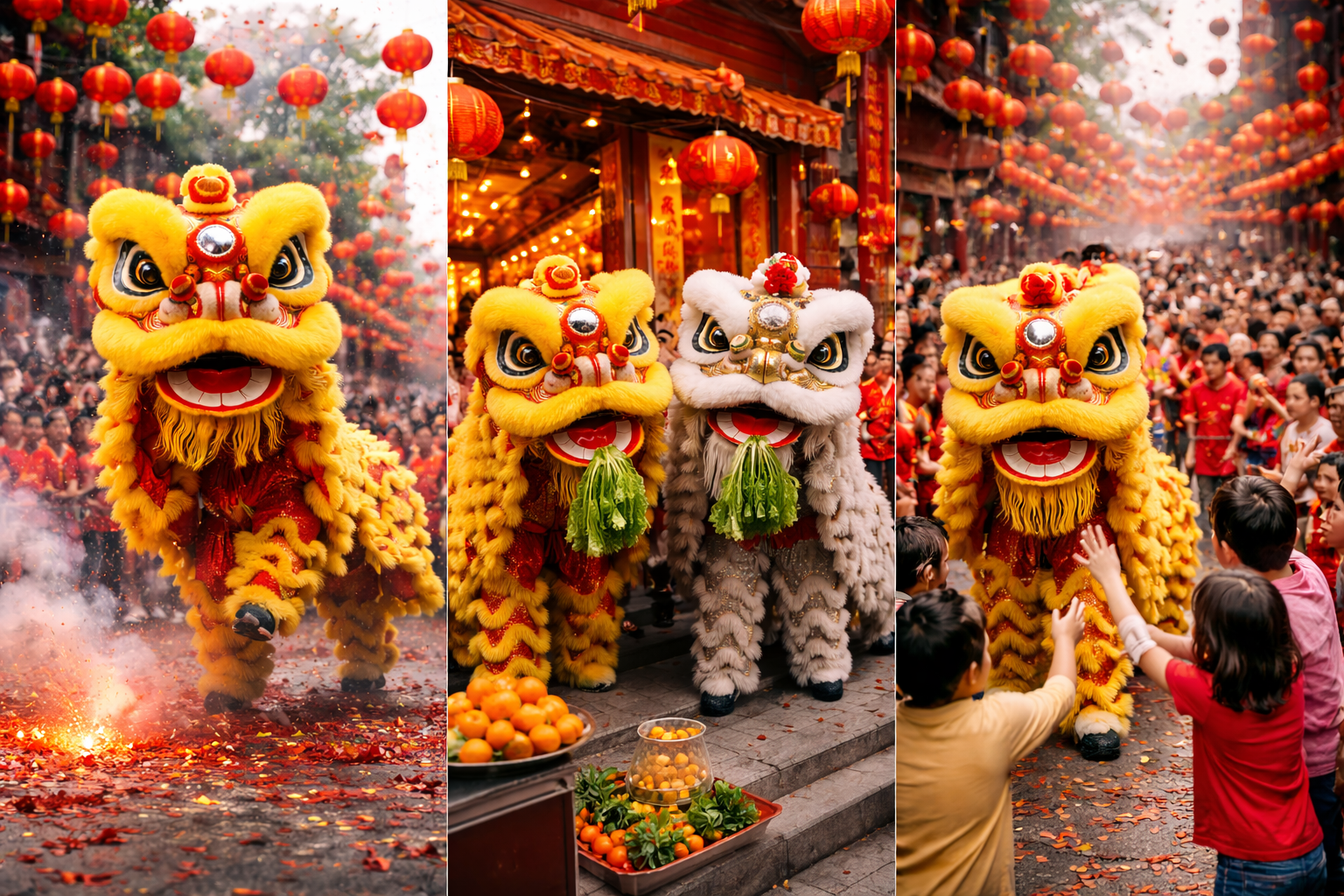
Lion dance is performed during Chinese New Year because it acts as a guardian. In traditional belief, the lion senses negative influence and drives it away. This idea explains why lion dance often happens at the very start of the new year and why it moves from place to place rather than staying on a stage.
Another important reason is intention. Chinese New Year customs are designed to set the tone for the coming months. Lion dance sends a message of confidence. It tells the community that the new year begins with strength, coordination, and awareness.
Compared to other New Year traditions, lion dance is active rather than symbolic. Firecrackers explode and fade. Decorations stay still. The lion moves, reacts, and interacts. That movement represents life continuing forward.
Lion dance during Chinese New Year is also tied to collective belief. Even people who don’t think about symbolism still feel the emotional shift when a lion dance begins. The sound, movement, and crowd reaction create a sense of momentum. That shared feeling is part of why the tradition lasts.
Over time, lion dance Chinese New Year performances became expected rather than optional. Businesses invite them to mark a fresh start. Communities organize them to strengthen connection. Families watch them to feel reassured.
So why is lion dance performed during Chinese New Year?
Because the new year is uncertain, and lion dance exists to face that uncertainty with confidence.
Closing Thought
Lion dance does not predict the future. It prepares people to step into it together.