Lion dance and Chinese New Year are so closely connected that many people assume they belong together by default. But this tradition didn’t happen by accident. The relationship between lion dance Chinese New Year celebrations is built on centuries of belief, symbolism, and community practice.
During Chinese New Year, everything is about transition—leaving the old year behind and welcoming a new beginning. Lion dance appears at this moment for a reason.


In traditional Chinese culture, the lion represents protection, strength, and positive energy. When the new year begins, people believed that unseen forces—both good and bad—were especially active. Lion dance was performed to clear the space, remove bad luck, and invite prosperity for the year ahead.
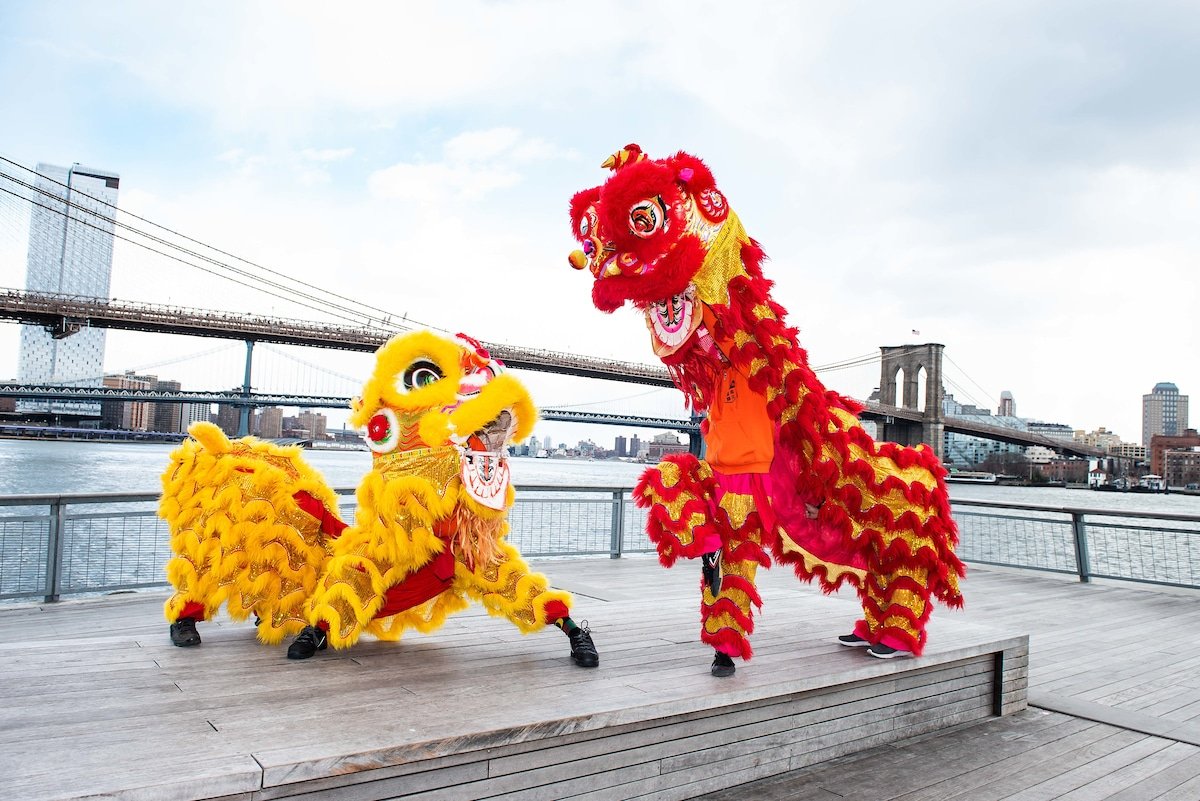
That’s why lion dance is not limited to one location during Chinese New Year. It moves through streets, enters shops, visits homes, and interacts with people. The lion doesn’t stay still. It travels, symbolically spreading blessings wherever it goes.
Another reason lion dance is so important during Chinese New Year is sound. The drums, cymbals, and gongs are intentionally loud. In traditional belief, noise breaks negative energy and announces confidence. Silence suggests uncertainty. A loud lion dance signals that the new year begins with strength.
While many people focus on the visual performance, Chinese New Year lion dance is also deeply social. Communities gather, businesses invite teams, and families watch together. The performance turns individual hopes for luck into a shared experience.
Different styles of lion dance appear during Chinese New Year, especially southern lion dance, which emphasizes symbolism and interaction. The lion bows, blinks, and reacts to its surroundings, reinforcing the idea that it is aware of the space it is blessing.
Today, lion dance Chinese New Year performances can be seen far beyond China. In overseas Chinese communities, the tradition continues as a way to preserve cultural identity and pass values to the next generation. Even people unfamiliar with the symbolism feel the energy change when the lion arrives.
So when people ask why lion dance is part of Chinese New Year, the answer is simple: the new year is about renewal, and lion dance exists to protect that renewal.
Final Thought
Lion dance Chinese New Year traditions are not about spectacle alone. They represent a collective wish for a better beginning—one filled with confidence, balance, and good fortune.