Lion Dance Costume: More Than a Performance Outfit
A lion dance costume is not just something performers wear. In Chinese culture, it is the heart of the lion dance itself. Without the costume, there is no lion—only movement. This is why lion dance costumes have always been treated with care, symbolism, and respect.
When people search for lion dance costume, they are often looking for more than an object. They want to understand what makes a costume authentic, meaningful, and suitable for real performances, especially during Chinese New Year and cultural events.
The Role of the Lion Dance Costume in Performance
In a traditional lion dance, two performers move as one inside the costume. The head, body, and tail must respond naturally to drum rhythms and each other’s movements. A well-made lion dance costume allows the lion to feel alive—blinking, bowing, reacting, and expressing emotion.
This is why experienced teams pay close attention to the structure of the costume, not just its appearance. Balance, weight distribution, and flexibility all affect how convincingly the lion can move.
A costume that looks impressive but moves poorly will never create a strong performance.
Types of Lion Dance Costumes
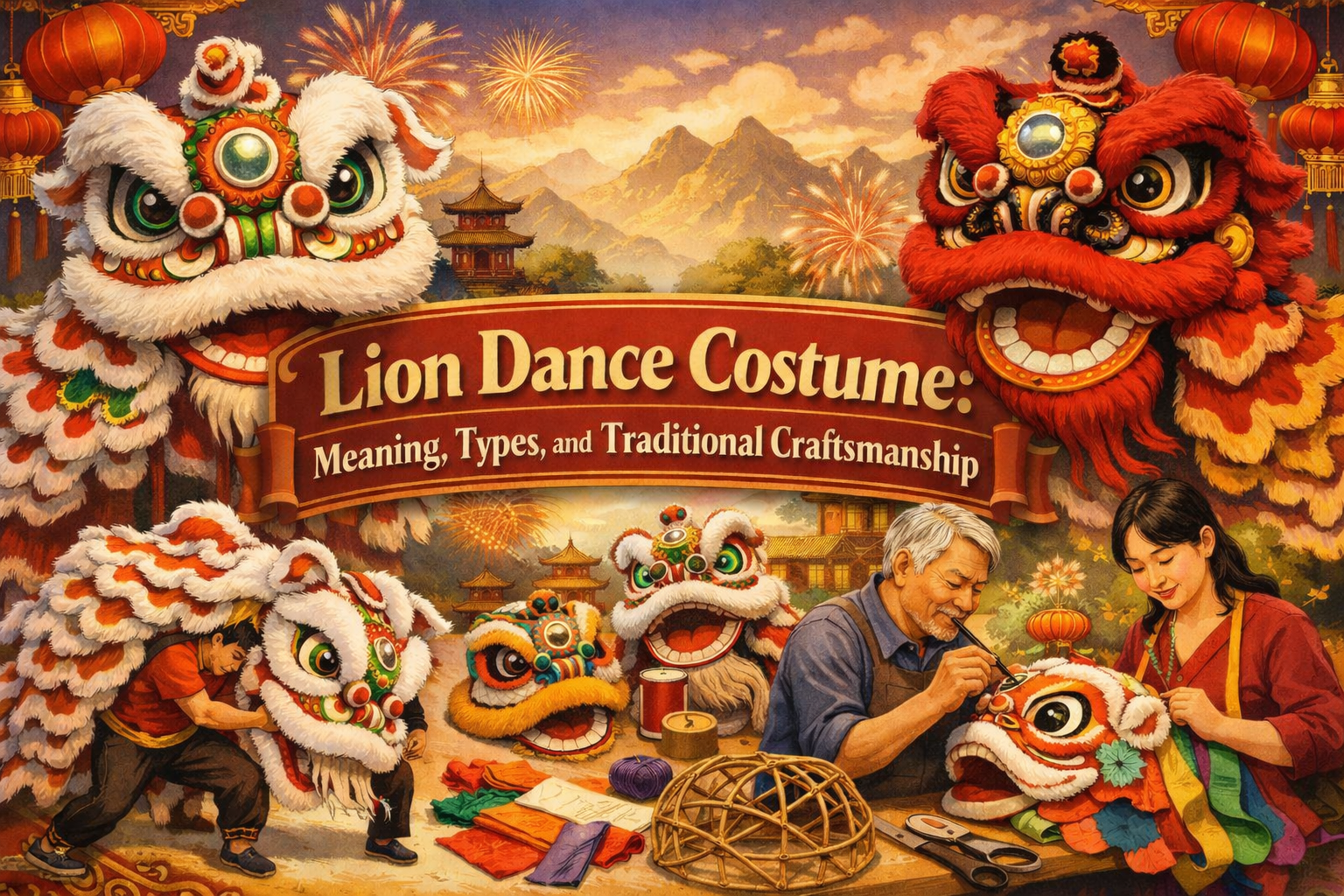
Lion dance costumes generally follow the same regional styles as lion dance itself.
Southern lion dance costumes are the most widely recognized. They feature bold colors, expressive eyes, and symbolic details. These costumes are commonly used during Chinese New Year, business openings, and community celebrations, where interaction and symbolism are essential.
Northern lion dance costumes aim to look more realistic, often covered in long fur and natural tones. They are designed for energetic, athletic performances and are frequently seen in staged festivals and large-scale events.
Over time, modern variations have appeared, especially in schools and overseas communities. While styles may evolve, traditional elements remain the foundation of a meaningful lion dance costume.
Symbolism Behind Color and Design
Every detail of a lion dance costume carries meaning. Color choices are never random. Red is associated with happiness and good fortune. Gold represents prosperity and honor. Black can symbolize strength and discipline.
Facial features matter as well. Large eyes suggest awareness. A movable mouth allows expression. Decorative mirrors on the forehead are traditionally believed to reflect negative energy away.
These elements turn the costume into a cultural symbol, not just a visual prop.
Traditional Craftsmanship vs Mass Production
Traditionally, lion dance costumes were handcrafted using bamboo frames, layered materials, hand-painted details, and carefully assembled fur and fabric. This craftsmanship ensured that each costume had its own character and durability.
Today, mass-produced costumes are widely available. They are often cheaper and visually appealing, but they may lack balance, longevity, or cultural accuracy. For casual displays, this may be enough. For real performances, especially during important events like Chinese New Year, many teams still prefer costumes inspired by traditional craftsmanship.
The difference is felt most clearly during movement. A well-crafted lion responds naturally. A poorly made one feels stiff.
Why Lion Dance Costumes Matter During Chinese New Year
Chinese New Year is the most important moment for lion dance performances. It represents renewal, protection, and a fresh beginning. During this time, lion dance costumes are expected to reflect tradition and seriousness of purpose.
Communities, schools, and cultural organizations often choose their lion dance costumes carefully for New Year celebrations. The costume becomes part of the message—welcoming luck, driving away negativity, and showing respect for tradition.
This is also why decorative lion dance items and handcrafted accessories are often prepared alongside the costume to complete the ceremony.
Who Uses Lion Dance Costumes Today?
Today, lion dance costumes are used by a wide range of groups, including:
- Community lion dance teams
- Schools and universities
- Cultural organizations
- Festival and event organizers
For many of them, the costume is not just equipment—it represents identity, tradition, and continuity.
A Living Tradition
Lion dance costumes continue to evolve, but their role remains the same. They bring the lion to life. They connect movement with meaning. And they allow tradition to be carried forward from one generation to the next.
For those involved in lion dance, choosing or understanding a lion dance costume is never just about appearance. It is about honoring culture, craftsmanship, and the spirit behind the performance.
Final Thought
A lion dance costume is not simply worn—it is performed.
And when made with understanding and respect, it becomes a powerful symbol of tradition in motion.