Many people think lion dance is just one single tradition. In reality, there are different types of lion dance, shaped by region, history, and the purpose of the performance.
Understanding these differences helps explain why lion dance can feel playful in one place and powerful or athletic in another.

At a broad level, lion dance is usually divided into southern lion dance and northern lion dance. These two styles developed in different regions of China and evolved in their own ways over time.
Southern Lion Dance
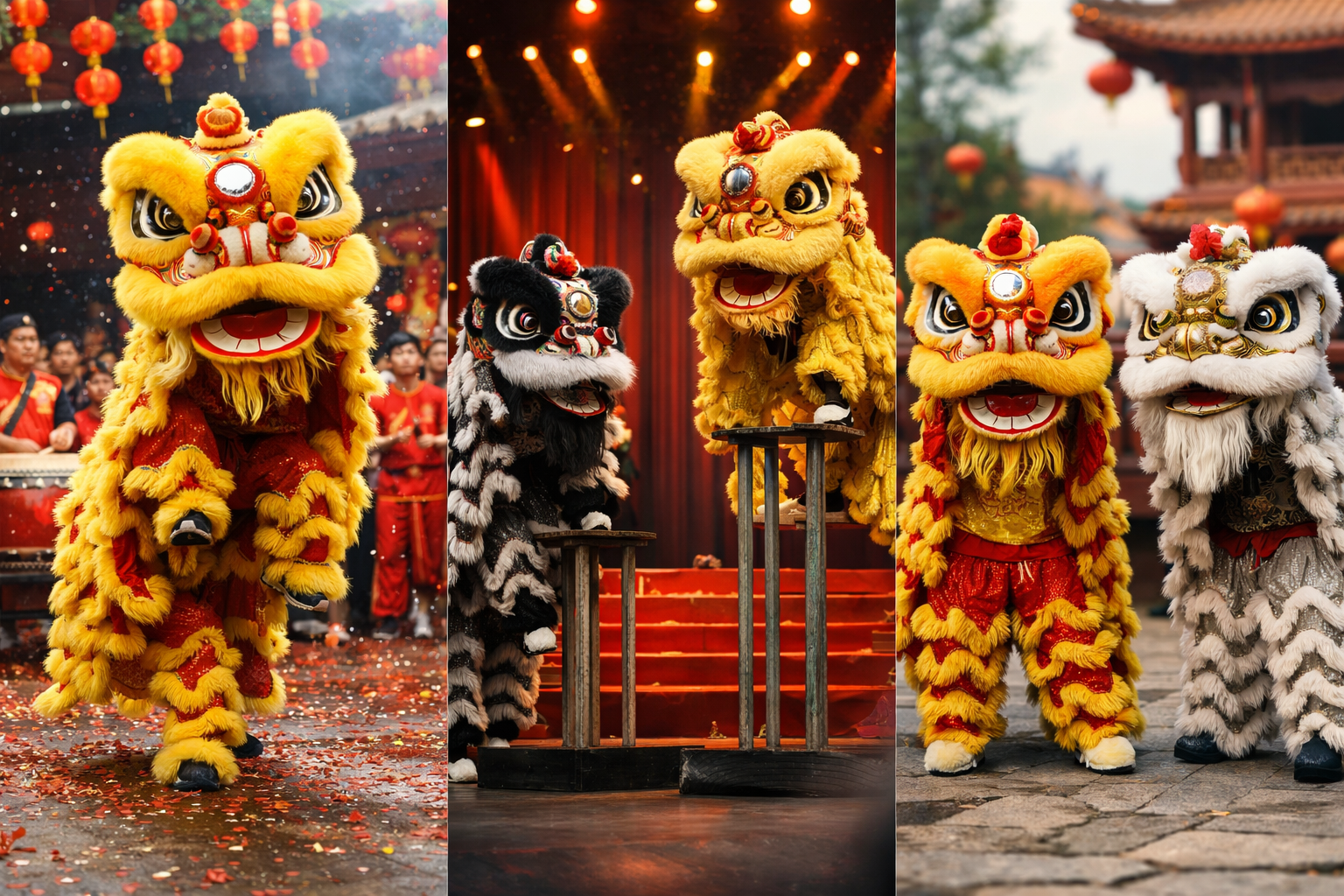
Southern lion dance is the style most people recognize, especially outside of China. It features bold colors, exaggerated facial expressions, and symbolic movements.
This style focuses heavily on meaning and intention. The lion is expressive—it blinks, bows, reacts to sound, and interacts with its surroundings. Performances are often tied to important moments such as Chinese New Year celebrations, business openings, and community events.
Southern lion dance is less about realism and more about symbolism. Every movement is meant to communicate confidence, protection, and good fortune.
Northern Lion Dance
Northern lion dance developed with a different focus. It aims to resemble a real lion more closely, both in appearance and movement.
This style often emphasizes athletic performance. Lions jump, leap, and move with speed and balance. Performances may include acrobatic elements and are commonly seen on larger stages or during major festivals.
Northern lion dance is usually performed in pairs, highlighting coordination and teamwork rather than interaction with the audience.
Other and Modern Variations
As lion dance spread to different regions and countries, new variations appeared. Many modern performances blend traditional elements with contemporary choreography.
In schools and cultural organizations, lion dance may be adapted for teaching, competition, or cultural exchange. While the movements may change, the core spirit of the dance—energy, rhythm, and presence—remains the same.
Why These Types Matter
The different types of lion dance show how one tradition can evolve without losing its identity. Regional styles reflect local culture, values, and performance needs.
To fully appreciate these differences, it helps to look more closely at how southern and northern lion dance compare in movement, symbolism, and purpose.
👉 You can explore this comparison in detail in our guide to Southern vs Northern Lion Dance.
Final Thought
Lion dance isn’t a single form frozen in time. Its different styles show how tradition adapts while staying meaningful across generations.